Shopping Cart
There are no more items in your cart


How to choose a surfboard for kids: beginner guide


Choosing the right surfboard size, shape, and construction determines whether a young surfer progresses steadily or abandons the water after a single week. A 30-litre rigid shape simply does not carry enough buoyancy to support a thirty-kilogram child through their first sessions in the white water. The variables that drive a sound purchase decision are: age, height, weight, skill level, and typical wave conditions.
Surfing requires equipment matched precisely to a rider's physical dimensions. The correct surfboard size provides the float necessary for early paddling attempts, sparing young shoulders from premature fatigue. We evaluate each of these elements carefully to ensure your investment corresponds to your child's actual ability.
You will find our comprehensive kids surfboard guide useful for comparing beginner boards and essential junior accessories. For broader context on shapes and materials, our surfboard selection guide covers the technical differences across all disciplines and skill profiles.
Best type of surfboard for beginner kids
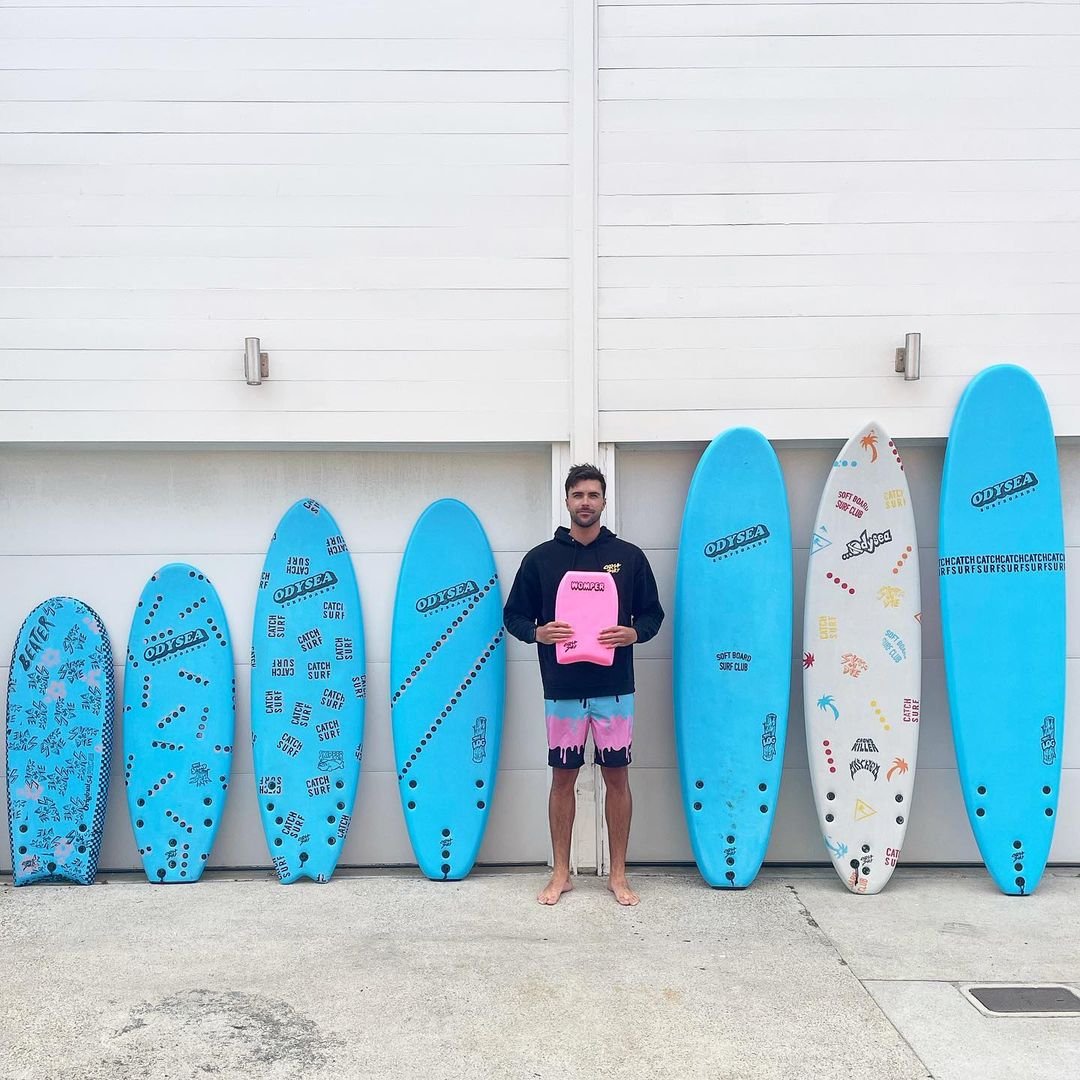
A foam surfboard is the only logical starting point for any beginner learning ocean mechanics. High-density foam construction absorbs direct impacts during the wipeouts that are simply part of early learning. That extra volume delivers the stability a light body needs, reducing the consequences of imprecise foot placement from the outset.
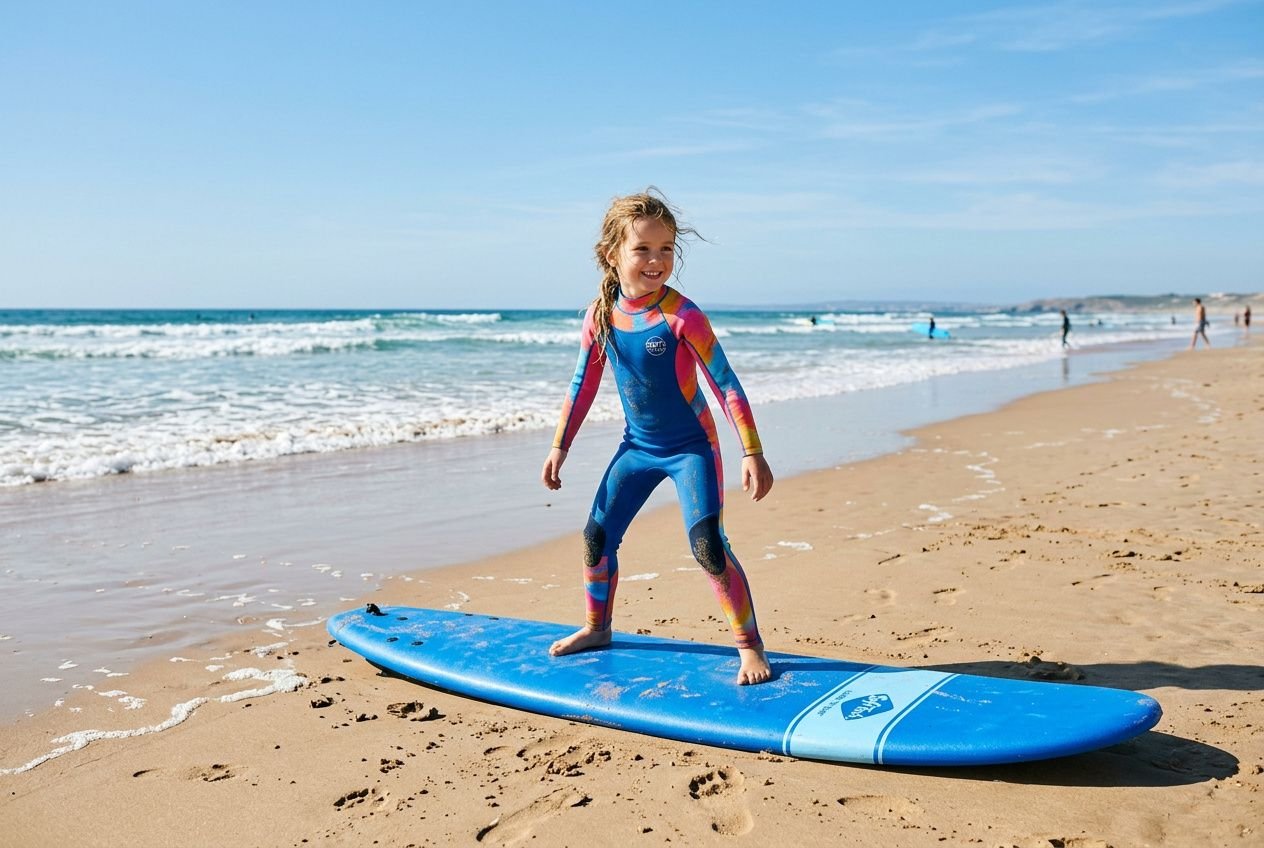
Why softboards are the top choice for children
A softboard for kids accelerates progression through four measurable structural advantages. A well-chosen beginner surfboard for kids delivers buoyancy, safety, and durability at the same time. Among professionals, foam boards remain the standard recommendation over any fibreglass alternative for children at the early stages, and the position we hold at Mundo-Surf.com reflects that consistently.
- Safety during wipeouts: Soft polyethylene foam on the deck and rails absorbs kinetic energy on impact. This material significantly reduces injury risk for the young surfer and for anyone nearby in the water.
- Superior stability: Generous volume and a wide outline maintain horizontal trim under a child's weight. That platform simplifies paddling and extends the time available for the pop-up phase.
- Flexible fin systems: Polyurethane fins bend on impact, preventing deep cuts and serious bruising. This safety feature does not exist on traditional rigid fin setups.
- Durability under impact: A sealed EPS core paired with dual timber stringers withstands aggressive handling on the beach. The high-density polyethylene slick bottom resists scratches across sand and shallow banks.
These soft surfboards retain practical value well beyond the beginner phase. Experienced riders regularly reach for them when summer wave conditions deteriorate and performance shapes lose their drive. A structurally sound board outlasts cheaper alternatives that warp and drag after a single month of heat exposure.
What makes a quality beginner surfboard for kids
Construction standards vary considerably across the current soft surfboard market. The correct surfboard for beginner kids requires a sealed EPS core flanked by internal stringers for adequate stiffness. These material choices determine whether a board survives consistent seasonal use or delaminates before August.
Safety features must remain non-negotiable when selecting equipment for children. A rounded nose, appropriate leash plugs, and impact-resistant rails protect the rider when conditions turn turbulent. The inventory we stock at Mundo-Surf.com is limited to reliable templates designed specifically to support young surfers safely.
Softboards vs hardboards for young beginner surfers
Rigid surfboards offer significantly less float and sharper rails than foam equivalents of the same length. In practice, a beginner on a fibreglass shape catches fewer waves and burns through their paddling energy prematurely. The performance advantages of fibreglass only become relevant once a surfer has fully mastered the pop-up and basic wave trim.
Moving to fibreglass becomes a reasonable step only when an older child demonstrates genuinely advanced surfing skills. Riders at that stage need rigid rails to drive through steeper sections and execute sharper turns. That transition in skill and ability typically occurs somewhere between the ages of eleven and fourteen.
For every other scenario, including children returning after a long break, foam construction remains the definitive choice. Based on fifteen years of outfitting surfers at Mundo-Surf.com, our position on this is firm: purchase quality foam first, and upgrade the beginner surfboard only when the rider's skill genuinely demands it.
How to Choose a Surfboard for My Child
Concretely, buying a surfboard for a child means balancing four specific variables rather than selecting a visually appealing shape. A child's height, weight, current ability, and age determine whether the equipment will accelerate or obstruct progression. When you align these factors correctly, the board actively builds confidence in the water.
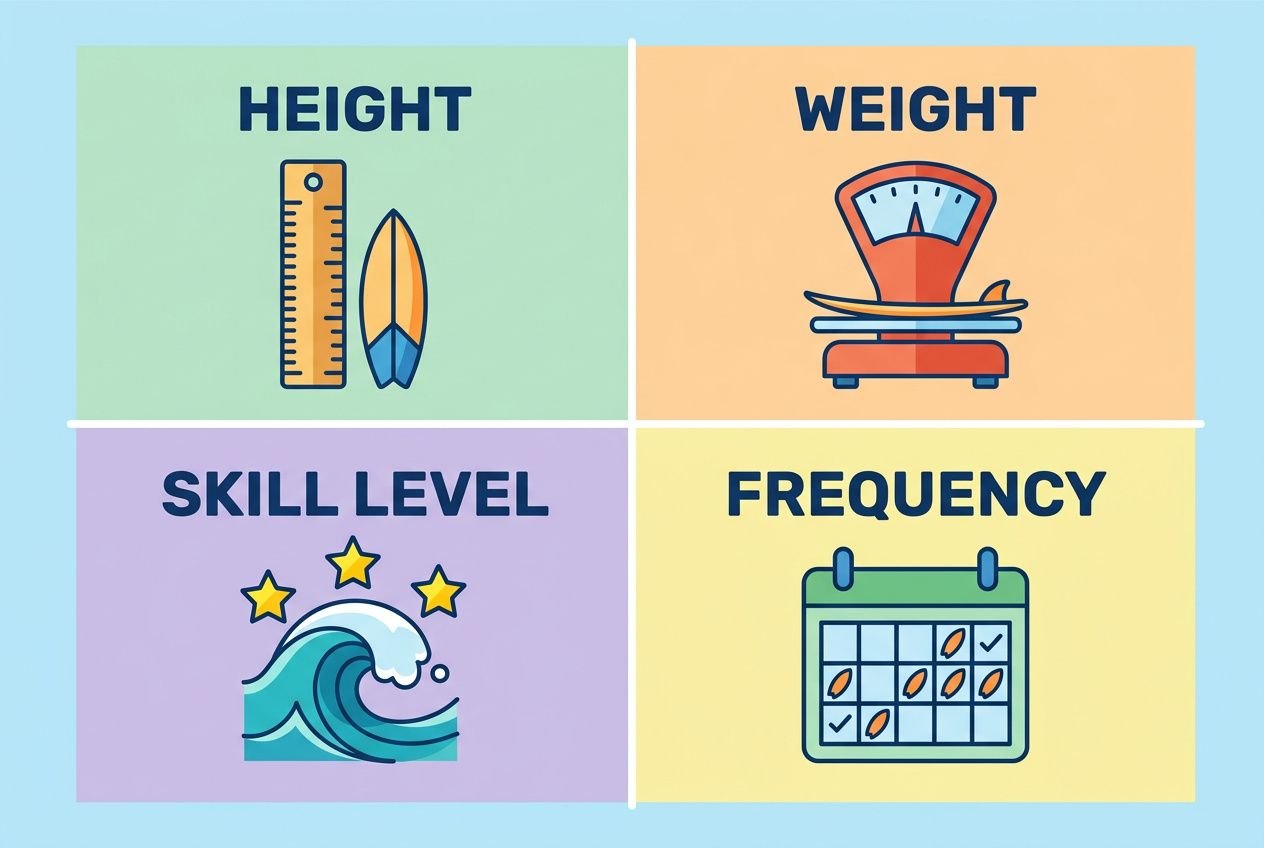
Key factors when choosing a surfboard for kids learning
When considering how to choose a surfboard for your child, the assessment begins with precise physical measurements. You must weigh the child and evaluate their water comfort alongside their realistic session frequency. A surfer entering the water weekly requires different equipment from one surfing three times a summer.
- Height and weight: These measurements dictate the minimum surfboard volume required to support the child's body. They also determine the necessary surfboard length to maintain proper trim and control.
- Surfing ability: A complete beginner requires maximum stability and soft construction to manage early impacts. A surfer with six months of experience, by contrast, benefits from a narrower outline to develop their skill further.
- Frequency of surfing: Children surfing weekly progress faster and can tolerate a slightly smaller board size sooner. Occasional surfers must stay on higher-volume options longer to maintain consistency.
In practice, when choosing a surfboard, selecting a slightly larger option yields better results. A larger shape allows the rider to catch waves more easily and reduces paddling fatigue. A board that is too small stalls progress immediately, producing the kind of frustration that drives young surfers away from the water.
Why volume and dimensions matter for young surfers
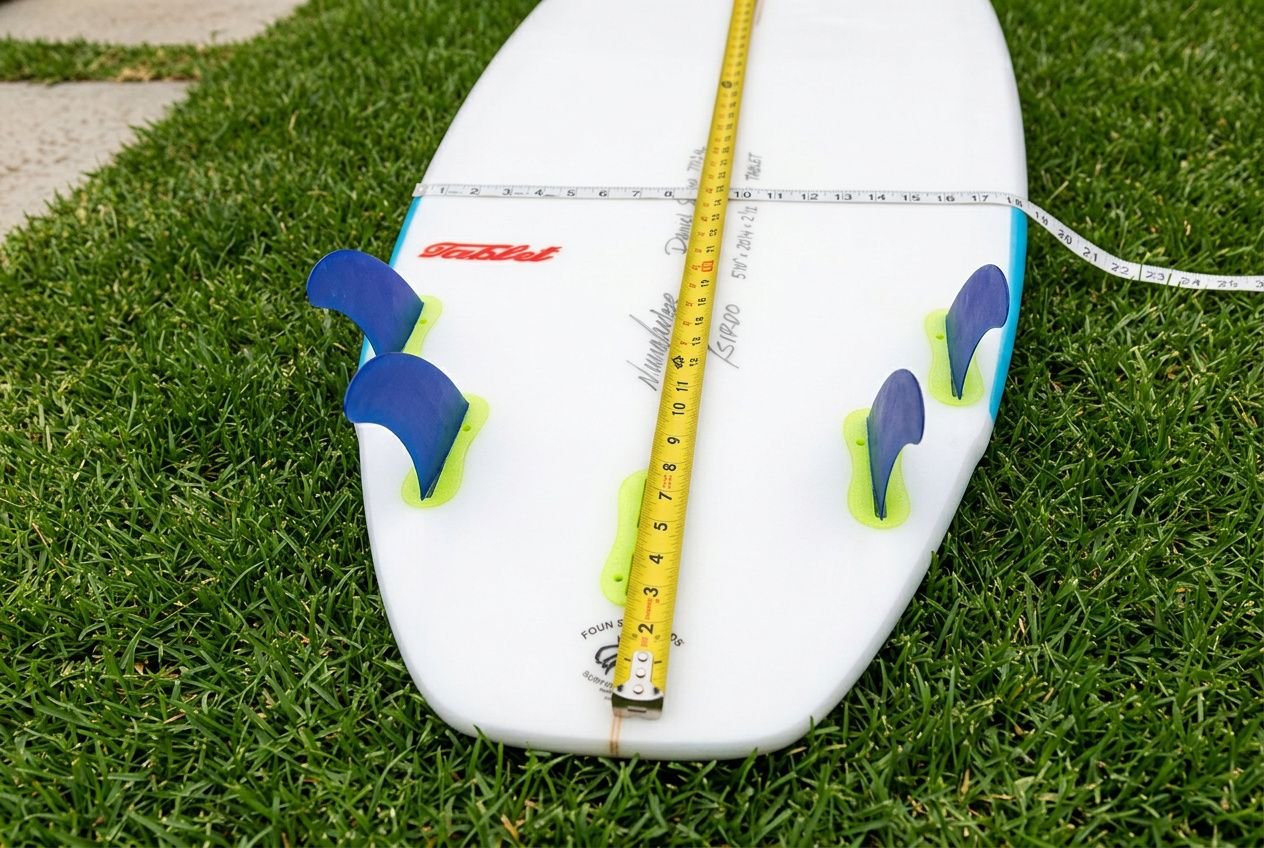
Measured in litres, volume remains the most reliable specification to ensure a surfboard for kids learning performs correctly. Higher displacement keeps the board riding above the surface, directly supporting forward momentum. Beginner shapes typically carry between 60 and 90 litres, providing the buoyancy necessary for early progression.
Length and width work alongside volume to create a stable platform for a developing surfer. These dimensions together define whether the equipment suits the child's current stage. The Mundo-Surf.com catalogue covers ages zero to sixteen, supported by a 100-day return window should your initial sizing require adjustment.
Recommended products
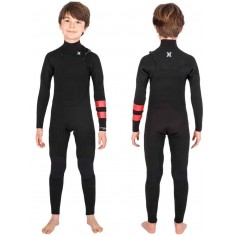
Surfboards for kids by age, size and skill level
A ten-year-old weighing 30 kg requires a completely different volume distribution than a ten-year-old weighing 45 kg, even when both share the exact same skill level. Age provides a baseline, but you must refine your choice using weight and current ability. Use age as your initial filter, then adjust the final board size using the weight-based surfboard size guide below.
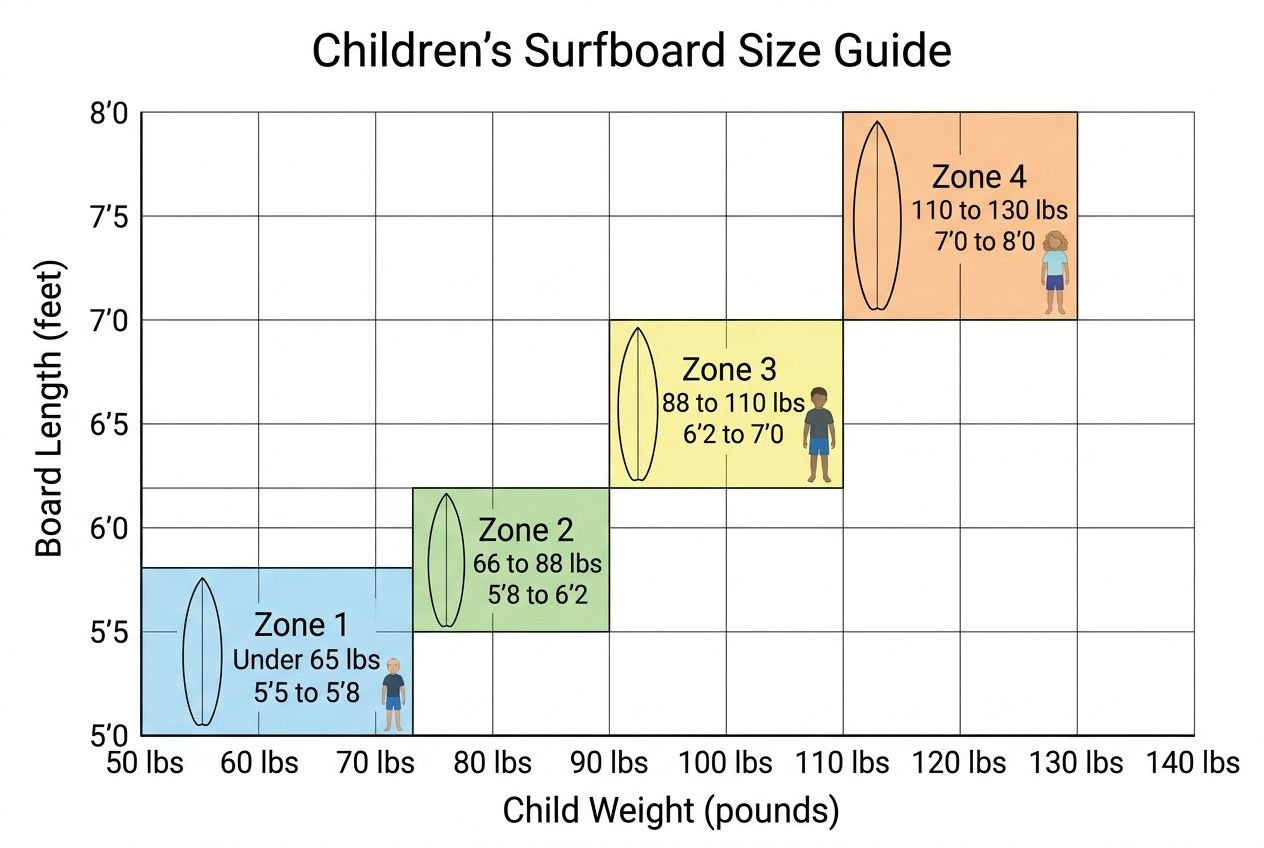
Surfboard size chart for children by age and weight
A surfboard for kids to learn on must match their physical dimensions rather than just their birthday. Where two adjacent size ranges overlap, I would systematically select the longer option. Extra surfboard length translates directly to greater stability, higher paddling speed, and considerably more waves caught during those critical first sessions.
- Ages 4–6, under 65 lbs: A surfboard length between 4'0 and 5'8 suits young children at this stage. Wide mini-longboard foam boards place safety and balance above every other design consideration.
- Ages 7–10, 66–88 lbs: Boards from 5'8 to 6'2 cover this transition period. Narrower softboards or small mini-malibus introduce early directional control while retaining sufficient volume for consistent wave-catching.
- Ages 11–13, 88–110 lbs: Boards from 6'2 to 7'0 fit this bracket well. Fish and hybrid shapes become viable as the surfer develops proper paddling technique, take-off mechanics, and the foundational surfing skills needed to progress.
- Ages 14+, 110–130 lbs and above: Boards from 7'0 to 8'0 or longer suit older learners. Unless the teenager demonstrates notably advanced athleticism, an 8'0 foam shape provides the most dependable platform for genuine progression.
Children up to age ten weighing under 50 kg progress fastest on boards in the 6'0 to 7'0 range. This bracket offers the practical trade-off you need on the beach: light enough for a child to carry unassisted, yet holding enough volume to make every session physically forgiving.
| Age range | Weight | Recommended board length | Board type |
| 4–6 years | Under 65 lbs (29 kg) | 4'0–5'8 | Mini-longboard foam, wide outline |
| 7–10 years | 66–88 lbs (30–40 kg) | 5'8–6'2 | Narrower softboard or small mini-malibu |
| 11–13 years | 88–110 lbs (40–50 kg) | 6'2–7'0 | Fish or hybrid softboard |
| 14+ years | 110–130 lbs (50–59 kg) | 7'0–8'0 | Foam mini-malibu or hybrid |
| 14+ years | Over 130 lbs (59 kg+) | 9'0 or longer | Longboard or high-volume mini-malibu |
Choosing the right children's surfboard at each stage
Which surfboard size for kids you select depends directly on their physical development stage rather than a generic age bracket. Young children aged four to six require maximum buoyancy and soft construction, removing any pressure to perform from the outset. Between ages seven and ten, narrower outlines become necessary because directional control begins to determine success on the wave.
Intermediate progression means moving away from thick foam boards towards smaller fibreglass or hybrid options that reward improved turning ability. Advanced teenagers can confidently step onto a grom surfboard with performance-oriented dimensions calibrated for lighter weights. This transition allows them to maintain wave count while supporting dynamic, technical manoeuvres across steeper conditions.
Essential gear to pair with your child's first surfboard
A surfboard size decision alone does not guarantee a successful session in the Atlantic. The equipment surrounding that board determines comfort, safety, and precisely how long your child will remain in the line-up. Cold water is the primary reason a young surfer will cut a session short.
- Junior wetsuit (4/3mm or 5/4mm): A 4/3mm handles most conditions capably, while a 5/4mm becomes necessary in winter water below twelve degrees. Thinner suits lose their thermal efficiency quickly on smaller bodies.
- Adapted leash: A correctly sized leash prevents the board from striking other surfers in the impact zone. Junior leashes have a reduced diameter and weight, cutting noticeable drag for lighter surfers.
- Quick-change poncho: Children lose core heat considerably faster than adults when exiting cold water. A thick poncho immediately halts the temperature drop that typically undermines the post-surf experience.
- Soft fin system: Most quality starter boards come with soft fins as standard to prevent cuts. If you purchase replacements, verify they use flexible materials rather than rigid fibreglass.
Sun protection deserves the same systematic approach as thermal retention during longer summer sessions. A UV-rated rash vest worn over a wetsuit, combined with waterproof sunscreen, manages the heavy UV exposure that young skin receives. Waterproof backpacks and protective board bags will then ensure this equipment survives the journey from garage to beach.
Concretely, finding the right setup requires matching physical realities with reliable, accessible stock. At Mundo-Surf.com, we hold our catalogue in a 1,000 m² warehouse, allowing you to secure precisely the right board size, wetsuit, and accessory combination backed by a 100-day return window. Financing across up to 18 interest-free instalments makes equipping a progressing surfer highly manageable without compromising on safety.
Frequently asked questions
What is the best type of surfboard for a beginner child?
For any beginner, a soft top surfboard remains the most practical choice. The forgiving construction delivers essential stability and lets children catch waves without risk of injury. In practice, foamies ranging from 6'0 to 7'0 cover the core learning requirements across all standard wave conditions.
What is the correct beginner surfboard size for a 7-year-old?
For a seven-year-old weighing between 30 and 40 kg, the appropriate beginner surfboard size falls between 5'8 and 6'2. A surfboard volume of 60 to 75 litres will support efficient paddling. That specific board size allows young riders to develop their mechanics safely across typical conditions.
What size foam board suits a 10-year-old learning to surf?
When choosing a surfboard for a ten-year-old approaching 50 kg, a beginner surfboard in the 6'0 to 7'0 range performs best. At this age, the balance between high volume and a surfboard size the child can carry independently matters considerably. A wider outline supports developing ability and wave-reading skill more effectively than added length alone.
Share this article: