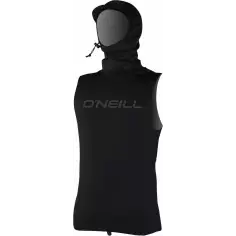
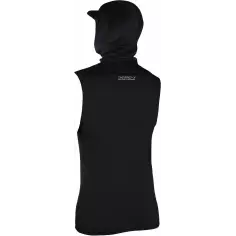
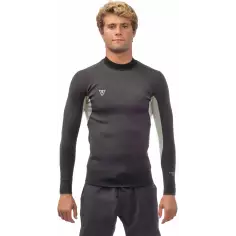
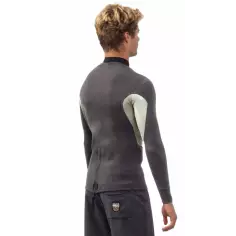
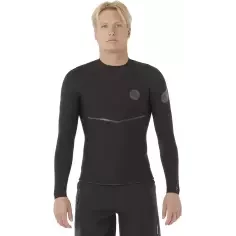
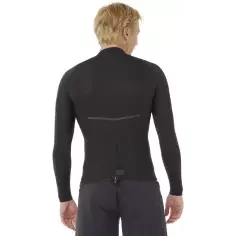
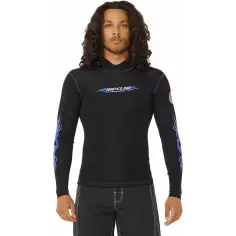
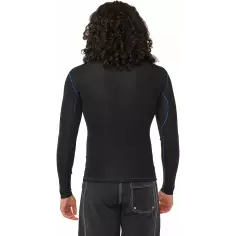
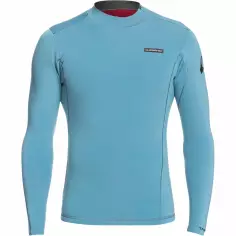
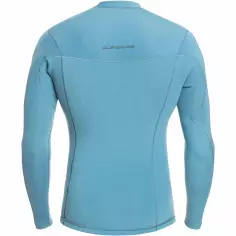
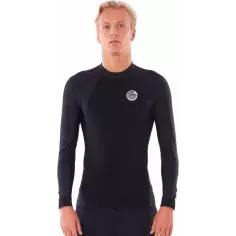
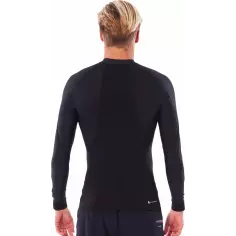
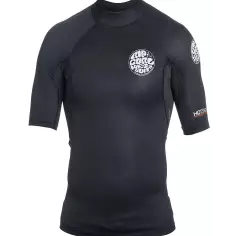
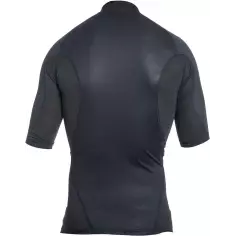
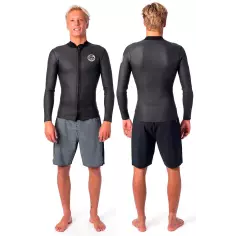
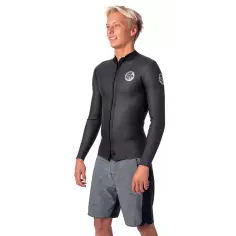
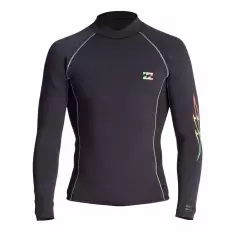
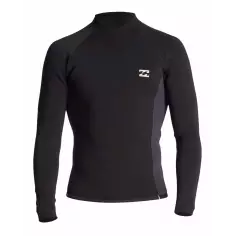
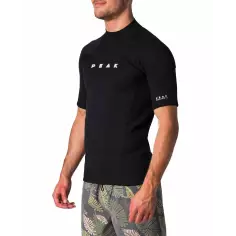
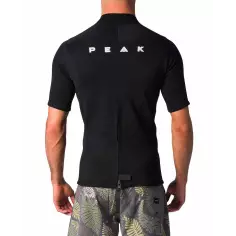
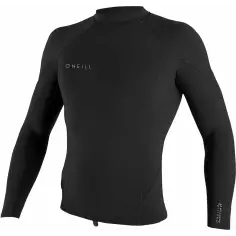
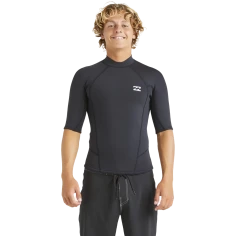
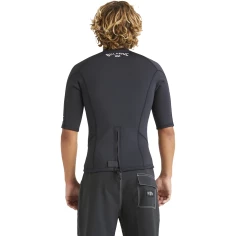
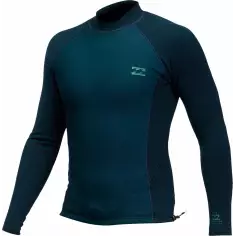
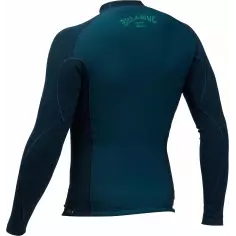
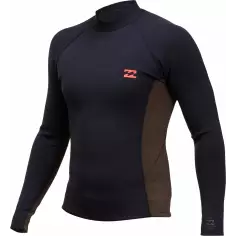
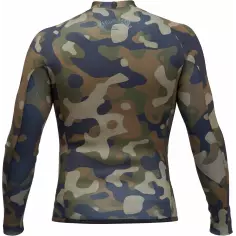
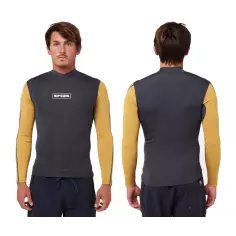
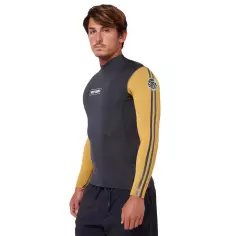
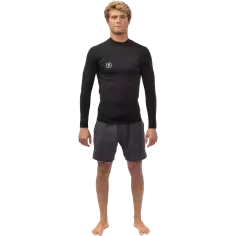
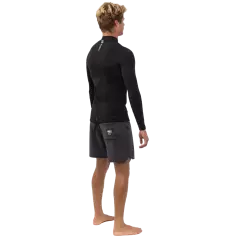
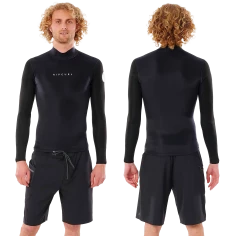
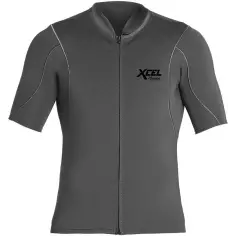
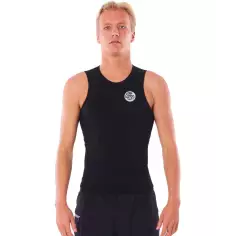
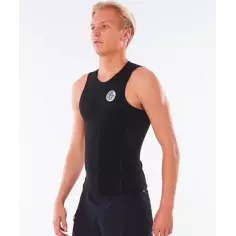
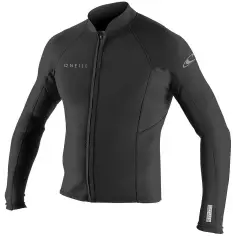
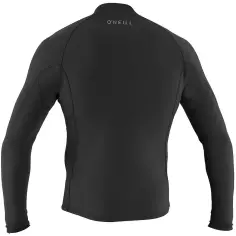
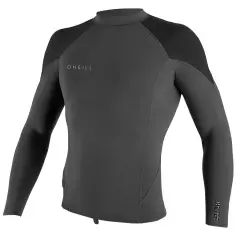
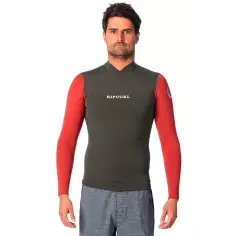
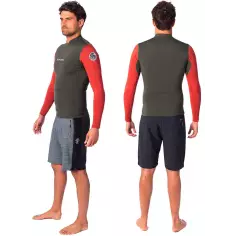
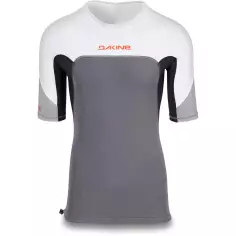
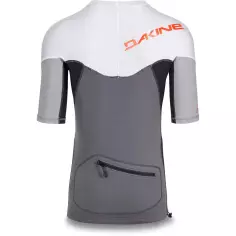
In neoprene tops for surfing, thickness determines warmth but not movement: unlike a full wetsuit, tops prioritize flexibility in shoulders and arms. Your choice depends on the water temperature where you usually surf and the type of water activities you practice. In warm waters, between 21 and 25 °C, a 2 mm neoprene top provides just the right insulation without limiting your paddle.
Neoprene thickness according to water temperature
Neoprene thickness is measured in millimeters and determines its thermal insulation capacity. For warm summer waters (21–25 °C), a 1.5 to 2 mm neoprene top is enough.
Neoprene tops for men: fit and sleeve differences
A men’s neoprene top prioritizes room in the shoulders and chest. There are also variations by sleeve type: short‑sleeve tops offer maximum mobility for very warm waters, while long‑sleeve tops protect the upper arm.
Some neoprene tops include a front zipper, a feature that makes them easier to put on and take off. In the water, this also means faster thermal regulation after surfing.
- Short sleeves: maximum freedom in warm waters
- Long sleeves: additional protection
- With front zipper: quick access and thermal regulation
Protection, flexibility and movement in neoprene tops
Quality neoprene protects the skin against board rash without sacrificing the flexibility surfing demands. A good neoprene top should allow a full paddle stroke without tightness in the shoulders or restriction in the arms. One thing to keep in mind for water sports in general: darker neoprene tops filter more UV radiation, which can be important for long summer sessions.
At Mundo‑Surf, with more than 15 years of experience, our position is that the right decision between neoprene tops comes from looking at three factors: thickness according to water temperature, fit according to gender and body type, and sleeve type according to the season.