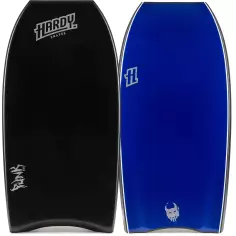
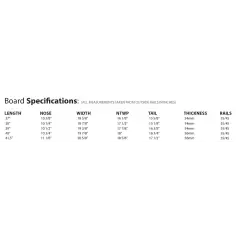
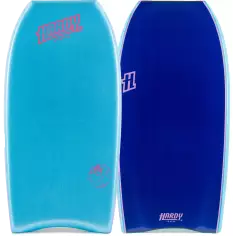
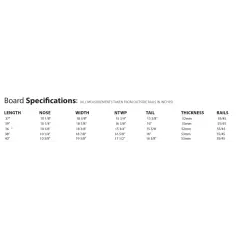
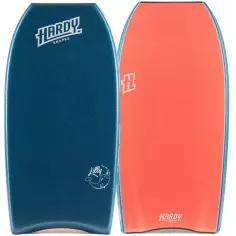
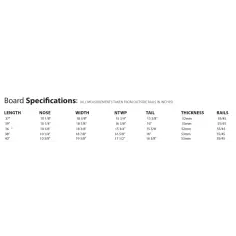
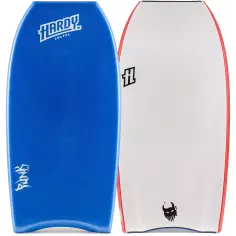
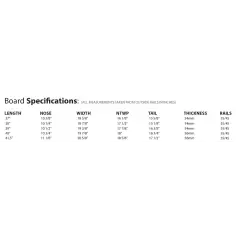
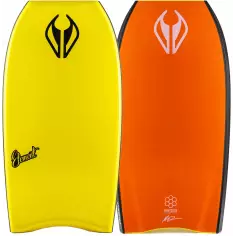
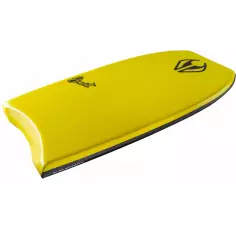
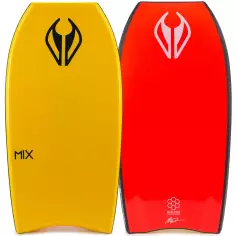
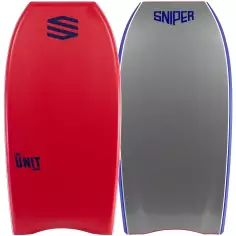
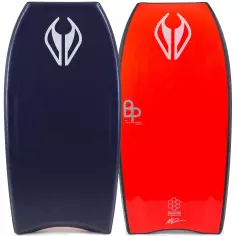
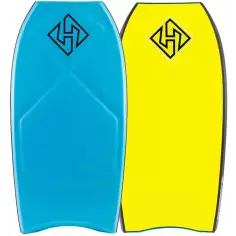
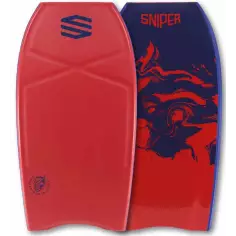
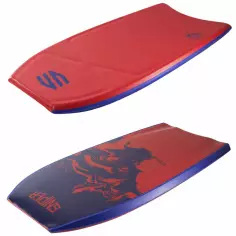
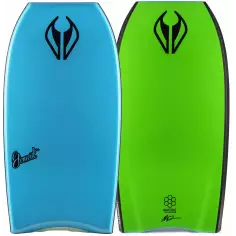
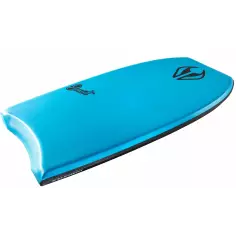
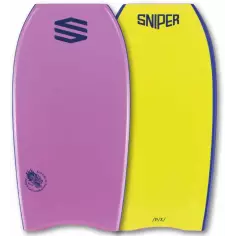
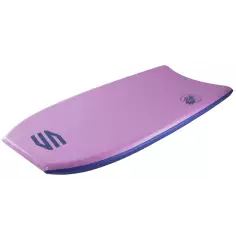
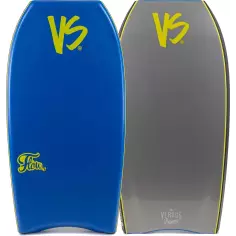
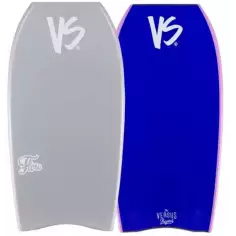
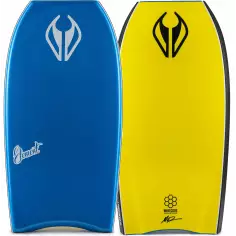
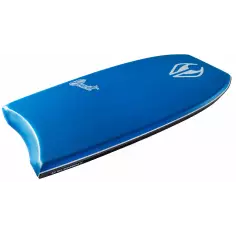
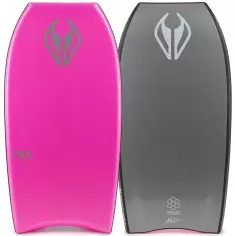
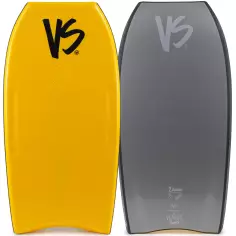
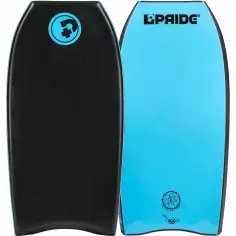
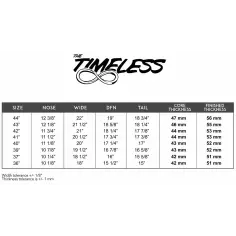
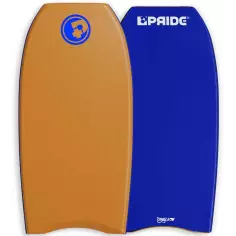
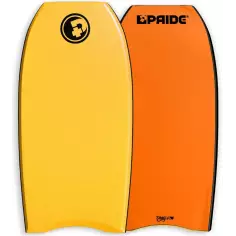
In a polyethylene bodyboard, the material determines how it behaves in the water: PE is more flexible than PP but heavier, which makes it ideal for cold water. The first question is size: too short reduces buoyancy, too long reduces maneuverability in hollow waves. The practical reference is the rider’s navel height. The second is the core and the number of stringers: this determines whether the board absorbs vibrations or transmits power directly.
PE bodyboards are especially useful when the water is below 16 °C, where polyethylene remains flexible without becoming brittle. For lighter riders, a softer core offers better buoyancy; for heavier riders, a higher number of stringers (two or more) improves control and stability. It’s worth paying attention to the deck — slick or standard, depending on grip —, the presence of channels that improve maneuverability, and the durability of polyethylene with respect to temperature changes. A mid‑range bodyboard in PE usually strikes a good balance between stiffness and flexibility for water between 12 and 18 °C.
How to choose a polyethylene PE bodyboard: check the type of core and stringer
What is polyethylene (PE) in a bodyboard and how does it affect performance?
Polyethylene (PE) is a high‑density material (2.4 pcf), which means it produces a heavier and denser bodyboard than other materials such as PP bodyboards and NRG bodyboards. The difference in performance does not lie in the density, but in how PE responds to temperature: in cold water, the water itself increases the stiffness of the polyethylene, compensating for what would otherwise be an overly flexible board. PE has plenty of flex, allowing the board to absorb irregularities in the waves without fatiguing. This flexibility is especially valuable in cold water because it protects the rider from hard impacts in small or medium‑sized waves.
What type of waves and riders is a PE bodyboard best for?
PE bodyboards are ideal for cold water or for riders who prefer boards with greater flexibility and impact absorption. In practice, we recommend PE when the water temperature is between 12 and 18 °C, where polyethylene performs better than higher‑end NRG; when the rider surfs small or medium waves that generate a lot of impact; when the rider is in a learning or progression phase, because the flex of PE makes the adaptation curve easier; or when the rider has a lower body weight and needs buoyancy without sacrificing control. What really makes the difference here is the size: we always recommend starting from navel height as a reference. For an adult of average build, 41.5"–42" is standard; below that, the learning curve gets longer; above 43", the board loses maneuverability in tight turns. The type of stringer is another factor to consider: a fixed stringer absorbs impact vibrations better, while a core without stringer offers maximum flexibility for riders who prioritize comfort over pure control.