Shopping Cart
There are no more items in your cart


Beginner surfboard guide: how to choose your first board


Choosing the right surfboard is a crucial foundation for any beginner surfer. The dimensions directly impact your stability and overall experience in the water. This surfboard buying guide covers essential factors like board size, volume, and budget to help you find your perfect match. Understanding these fundamentals will not only accelerate your progress but also make learning far more fun.
What every beginner should know before buying a surfboard
Before you make a purchase, it's important to understand that a beginner surfboard prioritizes buoyancy and forgiveness over high performance. Your first surfboard should be easy to paddle and catch waves with, which is key to building your skills. Consulting a good surfboard guide like this one helps you avoid costly mistakes and early frustration.
Why surfboard size and volume matter most
Volume, measured in litres, is arguably the most critical metric covered in any beginner surfboard guide. A board with ample volume floats you higher on the water, dramatically reducing the effort needed to paddle. Most beginners find that a board with 60 to 70 litres of volume gives them the consistency they need to catch waves and maintain balance.
The right surfboard size directly affects your speed and glide, making longer boards a better choice for learning. An 8 to 9-foot longboard offers maximum stability while still being manageable. A width between 22 and 24 inches also makes balancing during your pop-up much easier and more intuitive.
Thickness is what ensures your foam surfboard floats properly and supports your body weight without submerging. A thicker board sits higher on the water, giving you those precious extra seconds to stand up. Together, these dimensions create an ideal platform for successfully catching waves.
How to match board dimensions to your body and skill level
When thinking about your first surfboard, what to know boils down to matching the board's specs to your unique body and skill level. A great rule of thumb is to choose a board with a volume equal to roughly twice your body weight in kilograms. For instance, a 70 kg rider would need a board with plenty of volume for comfortable paddling and wave-catching.
- Under 70 kg: A 7 to 8-foot foam board with 50 to 60 litres offers easy maneuverability.
- 70–90 kg: An 8 to 9-foot board provides the floatation needed for consistent wave-catching.
- Over 90 kg: A 9-foot+ model ensures you have adequate paddling power and stability.
Your personal strength and fitness are also important factors to consider. Less athletic beginners will especially benefit from that extra volume. If you're ever in doubt, erring on the side of a slightly larger board is always the safer bet. A board that's too small makes paddling a struggle, while a slightly oversized one is forgiving and helps you learn.
Common mistakes beginners make when choosing a surfboard
The most common and expensive mistake is choosing a board based purely on its appearance or a pro's setup. When you're learning, function must always come before aesthetics. A stylish shortboard built for advanced surfers will only lead to frustration and hinder your progression.
Another major error is selecting a board that's far too small. Novices often underestimate how much volume they truly need for comfortable paddling and catching waves. It's always better to start a bit oversized; you can always transition to a smaller board later as your skills improve.
What Type of Beginner Surfboard Should You Choose
A wide variety of beginner surfboard types are available today, but only a select few are truly ideal for learning. Soft-top models dominate the beginner surfboard market because they combine safety, excellent buoyancy, and outstanding durability. Understanding the key differences between a foamie, longboards, and which shapes to avoid will guide your decision on what surfboard a beginner should buy.
Why a soft surfboard is the safest first choice
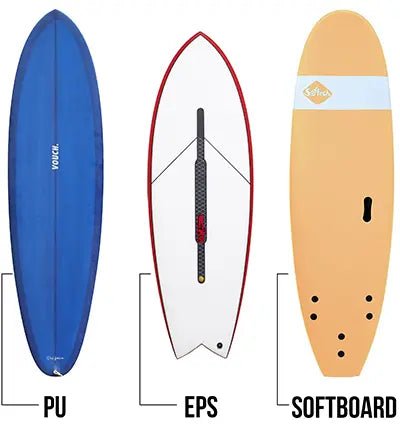
When choosing a beginner surfboard, instructors around the world consistently recommend soft-top models. A soft surfboard cushions your falls, dramatically reducing bruises and injuries during those inevitable early wipeouts. This forgiving construction easily absorbs the impact of technical mistakes that a hard surfboard would not tolerate.
Most soft boards feature an EPS foam core wrapped in soft foam on the top deck. This layered construction delivers strength and water resistance while maintaining the forgiving feel that new surfers need. The durable material also resists cracks, which lowers maintenance costs and extends the board's overall lifespan.
Beyond safety, a foamie offers superior buoyancy and catches waves much more easily than hard fiberglass alternatives. That extra floatation means you spend more time riding waves and less time exhausted from constant paddling. While the beginner surfboard category includes several soft options, foamies remain the ultimate entry point.
Longboard vs mini mal soft surfboard for beginners
Among beginner surfboard types, the longboard and mini mal soft surfboard serve different types of learners. A full-size longboard surfboard delivers maximum volume, stability, and glide speed to help you master the fundamentals. Meanwhile, mini mal soft surfboard models combine high stability with slightly improved maneuverability for adults.
| Feature | Longboard (8+ ft) | Mini Mal (7'6"–8'6") |
| Stability | Maximum | High |
| Wave Catching | Easiest | Very Easy |
| Paddling Effort | Low | Low |
| Maneuverability | Limited | Moderate |
| Best For | Learning basics | Faster progression |
| Typical Rider | All weights | Medium to heavy |
A longboard surfboard creates an exceptionally forgiving learning platform, especially for riders with limited upper-body strength. Its extra length builds momentum, while the width ensures you stay perfectly balanced during the pop-up. Conversely, a mini mal soft board helps learners achieve more responsive handling without sacrificing its excellent wave-catching ability.
Boards to avoid when you're just starting out
A shortboard is a high-performance tool designed strictly for experienced surfers with excellent paddling skills. These advanced shapes demand significant arm strength, quick reflexes, and precise wave-reading abilities. Opting for a shortboard as your first board will almost certainly lead to immense frustration and very slow progress.
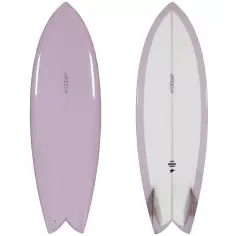
Fish shapes and hybrid designs occupy an intermediate space between beginner and highly advanced surfboards. Hard epoxy boards offer great volume, but they handle impacts poorly compared to a soft-top model. Therefore, you should avoid epoxy boards initially, stick to soft foam setups, and progress step by step over time.
Surfboard Buying Tips for Beginners on Brand, Budget, and Accessories
Choosing the right brand and setting a realistic budget are key factors that will influence your early surfing journey and overall satisfaction. By understanding price points, construction differences, and leading manufacturers, you can ensure your investment effectively supports your progress. Don't forget that accessories are also vital, as a board by itself isn't enough to fully prepare you for the ocean.
How Much Should You Spend on Your First Surfboard
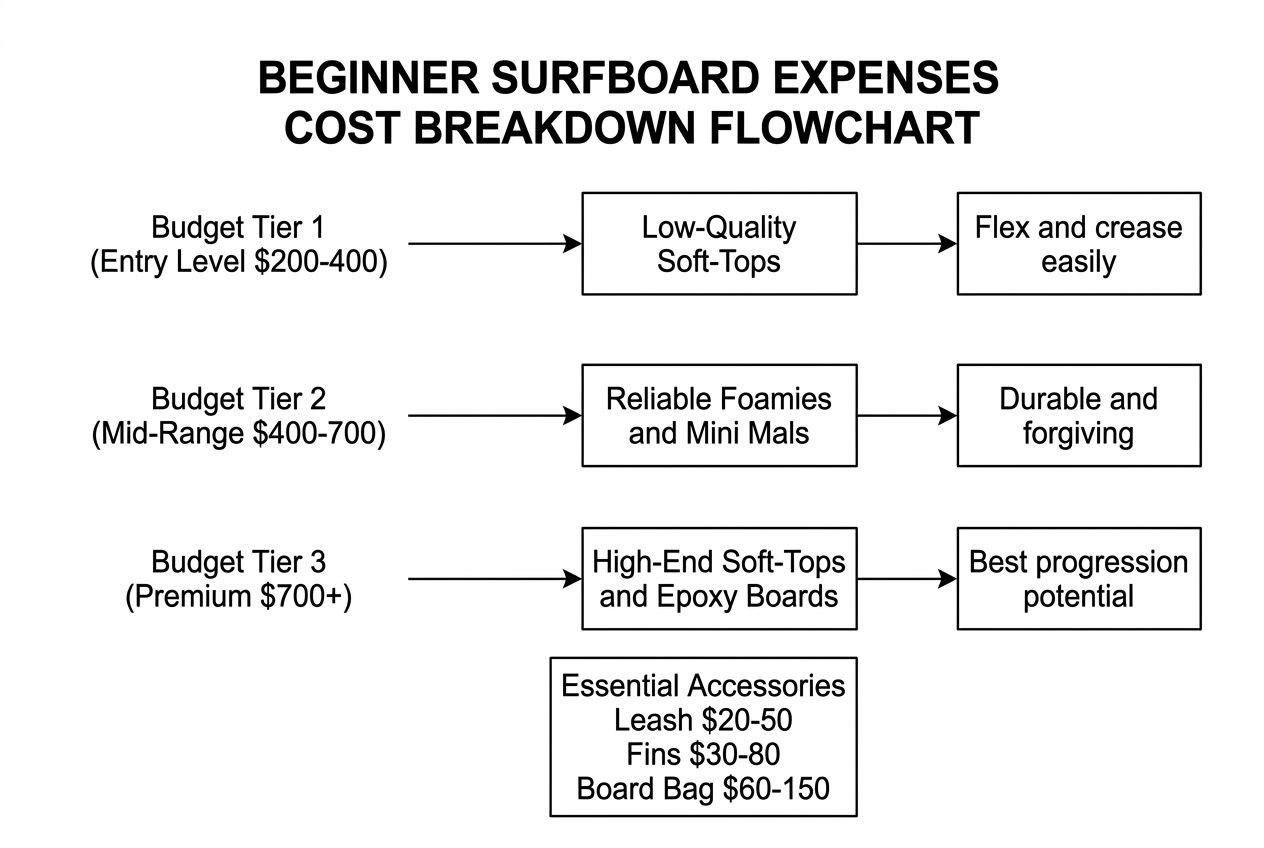
Following these surfboard buying tips for beginners highlights how important quality really is. An extremely cheap foamie often comes with a weak, overly flexible core that deteriorates quickly. Investing a bit more in a reputable brand gets you a durable beginner surfboard that will maintain its performance over time.
- Budget Tier ($250–$400): Entry-level soft-top boards from lesser-known brands. Anticipate quicker wear and tear, but they provide decent performance for casual learning.
- Mid-Range ($400–$700): Reputable brands known for proven durability, consistent quality, and good resale value once you're ready to upgrade.
- Premium ($700+): High-end construction using top-tier materials, frequently including eco-friendly options that ease your transition into intermediate surfing.
Epoxy boards, on the other hand, deliver fantastic value for advancing learners aiming to improve their skills. They provide better ding resistance than standard polyester models and often cost less than premium soft-tops. Their lighter weight and responsive feel help smooth the transition to performance riding after you master the basics.
Best Beginner Surfboard Brands Worth Considering
Your personal guide to buying a surfboard should include researching trusted brands with a focus on gear designed for learners. Softech produces modern, durable boards with wide outlines that are genuinely ideal for beginners. Similarly, Ocean & Earth's softboards deliver reliable stability to help you catch waves consistently.
- Softech: Known for modern designs, high durability, and wide outlines. They are a proven choice for novices progressing to intermediate levels.
- Ryder: These soft-skin boards offer high impact resistance. They provide excellent buoyancy and easy paddling, which accelerates learning.
- Zeus Gaia Midnight: Boasts generous volume and uses up to 50% eco-friendly materials, proving that sustainable choices can be quite affordable.
- Catch Surf: Equipped with strong EPS cores shaped like fiberglass models. They offer incredible buoyancy and durability that competes with more expensive hard boards.
These specific brands truly understand the needs of novices and tailor their designs accordingly. Prioritizing boards made for learners ensures you get forgiving materials and features that support skill development. Always review retailer feedback and overall brand reputation before finalizing your purchase.
Essential Accessories to Buy Alongside Your Board
The perfect surfboard needs the right accessories to operate safely and perform at its best. A thick leash with a swivel prevents you from losing your board in the surf. Meanwhile, a standard three-fin thruster fin setup works wonderfully for beginners.
This configuration delivers balanced turning without the need for frustrating adjustments as your abilities improve. Additionally, a protective board bag prevents annoying dings and dents during transport and storage. Allocating funds for these essentials ensures your investment is complete and supports months of steady progression.
How to Progress from Your First Beginner Surfboard to Advanced
Following a logical board progression path helps you avoid buying intermediate gear too soon. You'll move from enjoying high-volume stability to gaining better maneuverability and overall performance. Each step builds on your current skills, ensuring a smooth and frustration-free journey in surfing.

Surfboard Size Guide by Weight and Skill Level
A proven path to success for new surfers starts with a foam soft-top board. The larger board size offers superior buoyancy, which improves your balance and safety while learning. After you've mastered paddling and the pop-up, you can confidently transition to more agile equipment.
- Level 1 (No experience): Start with a beginner surfboard that has 60+ liters of volume. Concentrate on paddling, maintaining balance, and the fundamentals of catching waves.
- Level 2 (Paddling and pop-up proficient): Move to a mini mal or a funboard with 50–65 L. Begin practicing basic turns and riding across the wave.
- Level 3 (Basic turns consistent): A hybrid board with 40–55 L volume is ideal for refining your turning technique and improving wave selection.
- Level 4+ (Advanced fundamentals): Transition to a performance shortboard with 30–40 L to start working on aggressive maneuvers.
The primary factor in choosing the right surfboard size at any level is your body weight. Lighter surfers often find boards between 7–8 ft work well, while those who are heavier might need a 9+ ft longboard for better stability. These guidelines ensure excellent buoyancy regardless of the board construction.
When and How to Upgrade from Your Beginner Surfboard
The key to knowing when to upgrade is an honest assessment of your current wave-riding abilities. You should stick with your initial surfboard size for beginners until you can consistently catch waves and execute pop-ups. Switching boards before mastering these core skills will likely hinder your progress rather than help it.
A common mistake is purchasing a shortboard too early, hoping the advanced gear will instantly improve your surfing. The smarter approach is a gradual transition, moving from a foam longboard to a funboard before trying smaller, less stable boards. Mundo-Surf.com carries equipment for every stage of this journey, and our team is happy to help you find your perfect match.
Frequently asked questions
What size surfboard should a beginner get?
Finding the right beginner surfboard size primarily depends on your body weight and strength level. A good guideline is to choose a board with a volume approximately double your weight in kilograms. For example, if you weigh 70 kg, you'd typically need a board between 140 and 175 liters.
For optimal stability while you're learning to catch waves, look for a board length of 8 to 9 feet. A width of 22 to 24 inches will further enhance lateral stability and provide the buoyancy crucial for beginners.
When board size is uncertain, it's always safer to choose a slightly larger option; an undersized board can make learning much harder. For more detailed advice, check out our comprehensive beginner surfboard guide tailored to different profiles.
Is a soft top surfboard good for beginners?
Absolutely! A soft top surfboard is an ideal choice for anyone just starting out. Its foam construction softens the impact during wipeouts, which reduces the risk of injury and helps build confidence faster.
Soft boards offer excellent buoyancy, making paddling less exhausting and wave-catching much simpler. The forgiving material resists cracks and pressure dings, even after heavy use.
These beginner boards catch waves consistently, letting you focus more on riding and less on paddling. While hard boards perform well, they're less forgivingmaking a soft surfboard the smartest pick for your first beginner board.
How much should I spend on my first surfboard?
Plan to spend between $400 and $700 on a reliable board that will genuinely support your progress. Boards under $300 often suffer from weak cores that flex too much and wear out quickly.
Mid-range models from trusted beginner surfboard brands deliver proven durability and consistent quality. You should also set aside an extra $150–$250 for essentials like a leash, fins, and a board bag.
This investment ensures your gear lasts through months of enjoyable learning rather than frustrating early breakdowns. Higher-quality materials maintain their performance longer, offering better long-term value.
Recommended products
Share this article: