Shopping Cart
There are no more items in your cart


How to choose a wetsuit for surfing: the complete guide


Picking the perfect wetsuit can completely transform your time in the water, keeping you cozy and allowing you to surf longer. This simple guide walks you through how to choose a wetsuit by focusing on thickness, fit, and the materials used, all based on your local surfing environment. You’ll find essential wetsuit selection tips to match the water temperature and get a snug, comfortable fit.
Choosing the right wetsuit thickness for surfing
Wetsuit thickness is the most important factor for staying warm and performing well. Since local weather patterns heavily influence your choice, selecting the correct thickness helps you avoid both getting too cold and overheating. It's crucial to understand the year-round conditions in your area when choosing gear for your sessions.

How water temperature determines wetsuit thickness
Ocean temperatures change dramatically with the seasons, directly impacting what type of suit will keep you safe and comfortable. Researching typical regional trends helps you select the right neoprene thickness for your surf day. Surfing in cold water usually calls for a thicker suit, while warmer spots let you wear a thinner, more flexible wetsuit that doesn’t restrict your movement.
Wetsuit thickness is shown with numbers, like 3/2 or 4/3, which indicate the neoprene thickness in millimeters for the torso and limbs. The first number refers to the core protection, and the second number shows the coverage for arms and legs. A thicker torso helps trap heat, while thinner limb sections allow for greater mobility when paddling.
| Water Temperature | Recommended Thickness | Suit Type |
| Above 25°C | No wetsuit needed | Rashguard or none |
| Around 20-24°C | 1-2mm | Spring suit or shorty |
| Below 20°C | 3mm | Full wetsuit |
| Around 15-18°C | 4mm | Full wetsuit |
| Around 12-15°C | 5/3mm | Full wetsuit with accessories |
| Under 12°C | 6mm+ | Hooded full wetsuit with gloves and boots |
In cooler regions like the UK, winter water temperatures can drop to around 10°C, requiring a 5/3mm full wetsuit for adequate warmth. Meanwhile, the summer swells warm up to about 15-20°C, where a 2-4mm wetsuit offers plenty of comfort. Checking local temperature charts makes it much simpler to plan your gear for the entire year.
Wetsuit types for every condition
Different wetsuit styles are built for specific conditions, so it's important to know your options before you buy. A shorty provides minimal coverage with excellent flexibility, while a full wetsuit delivers total protection from the cold. Spring suits are versatile and great for those between-season days.
- Full wetsuit (steamer): This suit covers your full arms and legs, making it ideal for very cold water and maximizing warmth.
- Spring suit or shorty: These suits have short legs, and sometimes sleeves, making them perfect for warm days with a cool breeze.
- Farmer John and Short John: Sleeveless designs that keep your core warm while offering complete freedom for your arms to paddle.
- Jackets and tops: These are easy to layer over boardshorts whenever you need a bit of extra insulation.
A thin 2mm short-sleeved wetsuit is a popular choice for warm coastal days above 20°C. Check out this helpful resource on 2mm short wetsuit styles to see some great warm-water options. These suits provide just the right amount of insulation while keeping your mobility high for an energetic surf session.
Seam construction and its impact on warmth
Seams are often the weakest part of a wetsuit, directly affecting its overall durability and warmth. The way they are built determines how much cold water can seep through. Investing in high-quality seams can make a big difference in staying warm and how long your suit lasts.
Flatlock seams are affordable but can allow some water in, and they are common on entry-level suits. Glued and blind-stitched seams reduce leakage while still offering good flexibility. For the best protection, liquid-taped seams are fully sealed and waterproof, marking the top tier in wetsuit construction.
Wetsuit Fit and Sizing Guide for Surfers
A good wetsuit should fit like a second skin, trapping a thin layer of water against your body without feeling uncomfortably tight. This prevents water from flushing through, which robs warmth and restricts mobility. Finding the right size is essential for staying warm and moving freely when surfing.
How to Measure Yourself for a Wetsuit
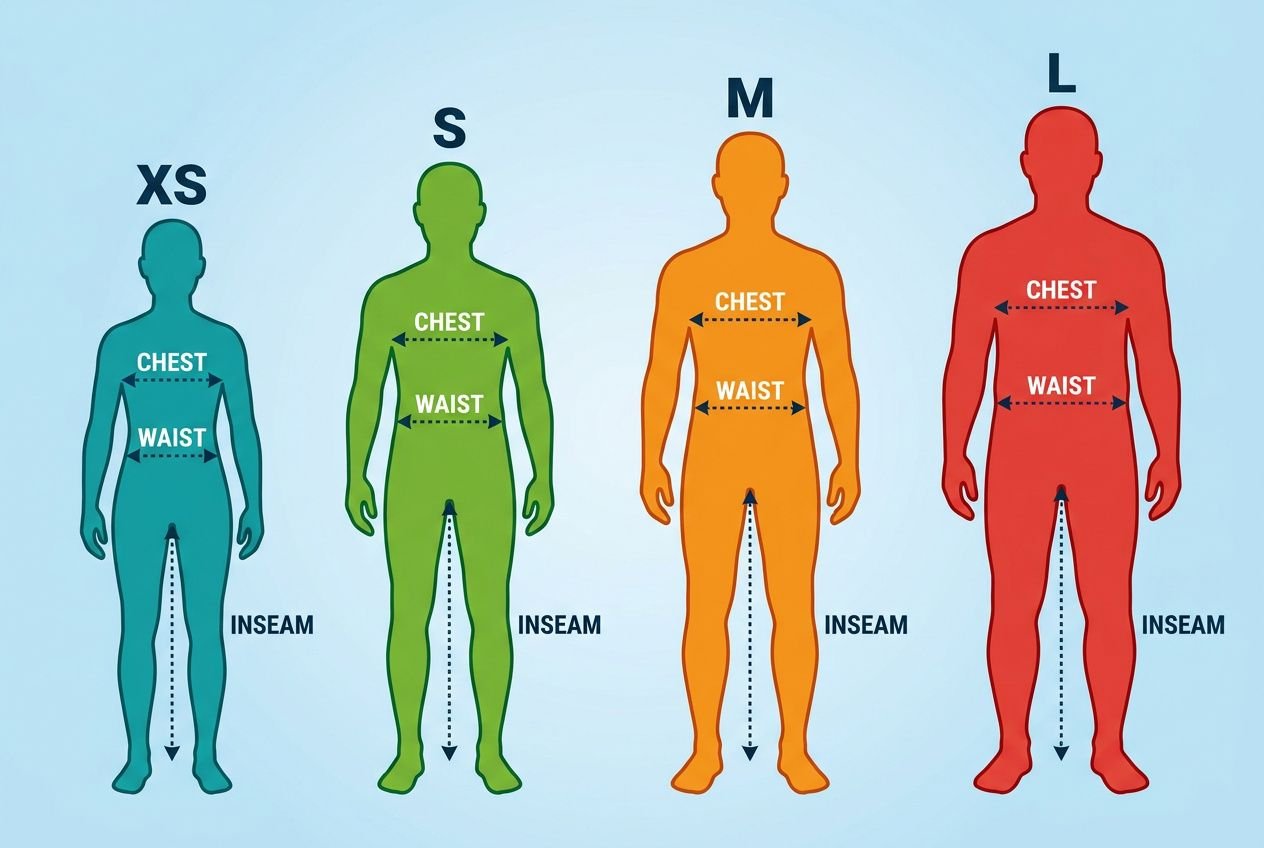
Begin with your weight, not your height. Always check the brand-specific sizing chart before buying a wetsuit. Different brands have unique fits—what’s labeled "small" in one brand may not match another.
- Chest circumference: Use a soft tape measure around the fullest part of your chest, keeping it parallel to the floor.
- Neck, waist, and hips: Measure around each of these areas, keeping the tape snug but not tight.
- Inseam: Stand barefoot and measure from your inner thigh down to your ankle, following your leg’s natural shape.
- Weight is key: Always match your weight first. If you’re between sizes, consider sizing down for better heat retention.
Wetsuit sizes usually range from XS to XL, with tall and short options for limb length. High-quality neoprene offers excellent stretch, making the suit easier to put on and move in. A flexible, well-fitted suit clings to your body, boosting warmth and mobility while surfing.
Tips for Trying On and Testing Wetsuit Fit
A new wetsuit should feel snug when dry—neoprene will stretch and conform once wet. It may stick to your skin when you sweat, but that disappears in the water.
- How to put it on: Roll it up from the legs and waist—don’t pull from the back. A plastic bag helps your feet slide in easily.
- Test your movement: Simulate paddling, squatting, and stretching while still on land to check for comfort and fit.
- Test in the water: True comfort and stretch become clear once you’re paddling. Make sure your range of motion feels unrestricted.
Opt for a suit that feels almost too tight when dry—avoid loose fits that create gaps and drain warmth. For more guidance, see the wetsuit size guide to help you choose the right size every time.
Wetsuit Closure Types and Materials Explained
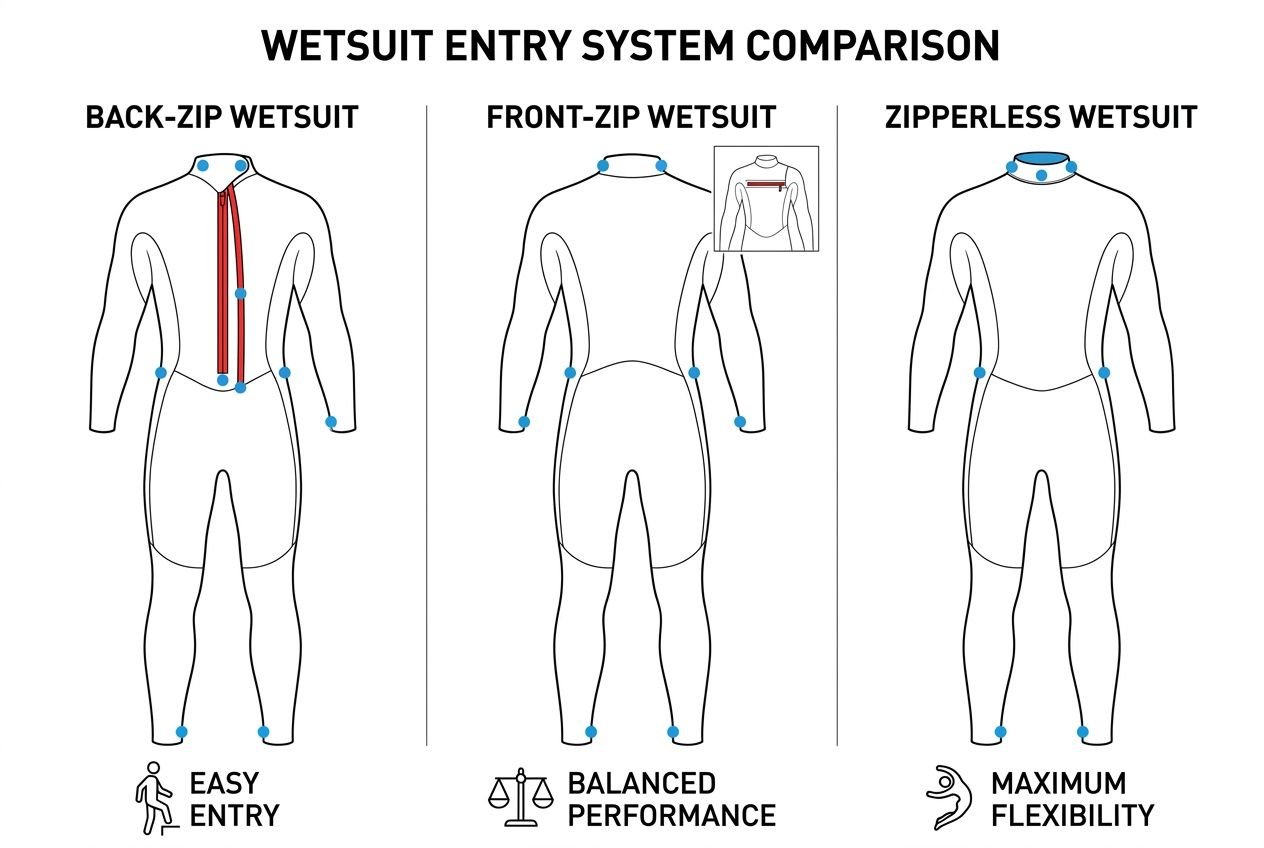
The closure system you choose significantly impacts warmth retention, ease of use, and overall comfort while surfing. There are three main designs to consider: back-zip, front-zip, and zipperless. Understanding their differences is key to selecting the ideal suit that matches your desired flexibility and surfing style.
Back-zip, Front-zip, or Zipperless Wetsuit
Back-zip wetsuits are notably affordable and very easy to get into, making them an excellent wetsuit for beginner surfers. The trade-off is that this design can allow more water to flush through during movement, which slightly reduces overall warmth.
- Back-zip advantages: They allow for easy entry and exit, are budget-friendly, widely available in any size, and are perfect for newcomers still learning proper technique.
- Front-zip advantages: They create a tight seal with better shoulder flexibility. They offer an excellent balance between thermal protection and mobility, retaining superior heat.
- Zipperless advantages: These provide maximum comfort with minimal flushing. They are exceptional at retaining heat but require more effort to put on.
Chest-zip systems position the zipper on your chest to create a snug seal around the neck. Zipperless designs utilize tension cords to offer a highly flexible fit that prevents most water entry. It's worth noting that a zipperless wetsuit might be challenging for larger or less flexible surfers to wear.
Neoprene Materials and Sustainability
Your choice of material affects the durability, flexibility, and weight of your gear. Traditional petroleum-based neoprene is still a common and affordable rubber option. However, modern eco-friendly materials now offer similar—or even better—performance, which is crucial to know when choosing a wetsuit for specific conditions.
Limestone-based neoprene is lighter and absorbs less water than standard materials. Yulex, a natural rubber alternative, provides a hypoallergenic and eco-friendly solution. These innovations allow you to balance top-tier performance with sustainable practices while enjoying your time surfing.
Choosing the Right Wetsuit as a Beginner Surfer
Starting with the basics ensures you make a smart investment that grows with your skills. Choosing a wetsuit for its ease of entry and reliable warmth is often more important than opting for expensive premium features. Focus on fundamental comfort before advancing to more specialized gear.
Your first suit should perfectly match your local water temperature. A basic back-zip full wetsuit is ideal for understanding how the ocean impacts your comfort. As you progress, you can begin to explore wetsuits with more advanced closure systems.
- Start with back-zip: Opt for a standard full wetsuit for straightforward entry and dependable performance.
- Prioritize proper fit: Dedicate time to get your sizing right. A well- fitted budget option will always provide better mobility than a poorly fitted, expensive one.
- Learn care routines: Rinse your wetsuit after each session and dry it away from direct sunlight to ensure its long-term durability.
- Progress strategically: As your skills improve, consider front-zip styles and wetsuits with better seam construction for enhanced performance in the ocean.
The closure type is equally as important as thickness and overall fit when you choose a wetsuit. While back-zips offer easy entry, front-zips provide superior freedom of movement. For a detailed comparison of these options, explore surf wetsuit closures to determine which system best suits your needs.
Recommended products
Frequently Asked Questions
In the UK, summer water temperatures typically reach a comfortable 15-20°C, while winter temperatures can drop to a chilly 10°C. To choose the right neoprene suit for warmth, consider your local water temperature carefully. For colder winter months, a 5/3mm or 6/5/4mm wetsuit provides essential thermal protection without sacrificing too much mobility.
During the warmer summer months, a lighter 2-4mm suit will offer sufficient warmth while significantly enhancing your freedom of movement. Always check local forecasts before you choose your gear to ensure it matches the current conditions.
A new wetsuit should feel very tight and quite snug when you first try it on dry. This initial tightness is perfectly normal, as the neoprene material will expand slightly once wet, allowing for a more comfortable and functional fit.
If the suit feels loose or baggy right away, it's definitely the wrong size. To avoid this, prioritize your weight over your height when consulting the sizing chart. A loose fit leads to constant flushing of cold water, which dramatically reduces the suit's warmth.
For beginners, a back-zip wetsuit is often the best choice because it's incredibly easy to get on and off. This simplicity lets you focus on developing your skills and enjoying the water, rather than struggling with the suit itself.
That said, a front-zip suit offers a great balance of easy entry and superior warmth, making it an excellent option if you plan to progress quickly. As your skills and confidence grow, you can always upgrade to a more advanced model for enhanced mobility and performance.
Share this article: