Shopping Cart
There are no more items in your cart


Spring suit vs full suit: key differences in wetsuit types


The difference comes down to coverage, neoprene thickness, thermal performance, and how much movement you want once you paddle out.
What is a spring suit wetsuit and how does it differ
A spring suit and a full wetsuit share the same neoprene construction, but that is where the overlap ends: one favours lighter coverage and flexibility in warm water, the other is built to hold warmth through cold water and longer sessions.

Spring suit coverage and design explained
The cut defines it: a spring suit covers the torso with sleeves and legs that stop short of a full-suit layout. Most versions use short legs ending above the knee, paired with either a short-sleeve upper or longer sleeves, depending on the design.
- Short legs: the suit covers above the knee, which reduces neoprene bulk and improves leg movement.
- Sleeve options: you will find a short-sleeve version and models with longer arm coverage, including the short arm steamer format.
- Neoprene thickness: usually 2mm or 3/2mm, which keeps the springsuit light, flexible, and well suited to warm water or transitional weather.
In practice, less neoprene means less retained warmth, so comfort drops faster if the conditions cool off mid-session.
Full suit design and neoprene thickness overview
Once you compare a spring suit and a full suit directly, the full suit is the more protective option. Also called a steamer or fullsuit, it covers from neck to wrists and ankles, leaving only the hands, feet, and head exposed.
That extra coverage changes the thermal range straight away: common thicknesses are 3/2mm, 4/3mm, and 5/4mm. The numbers describe neoprene distribution, with thicker panels through the chest and back and more flexible material in the sleeves and legs, so you keep warmth without losing too much movement.
Spring suit or full suit, which suits your climate
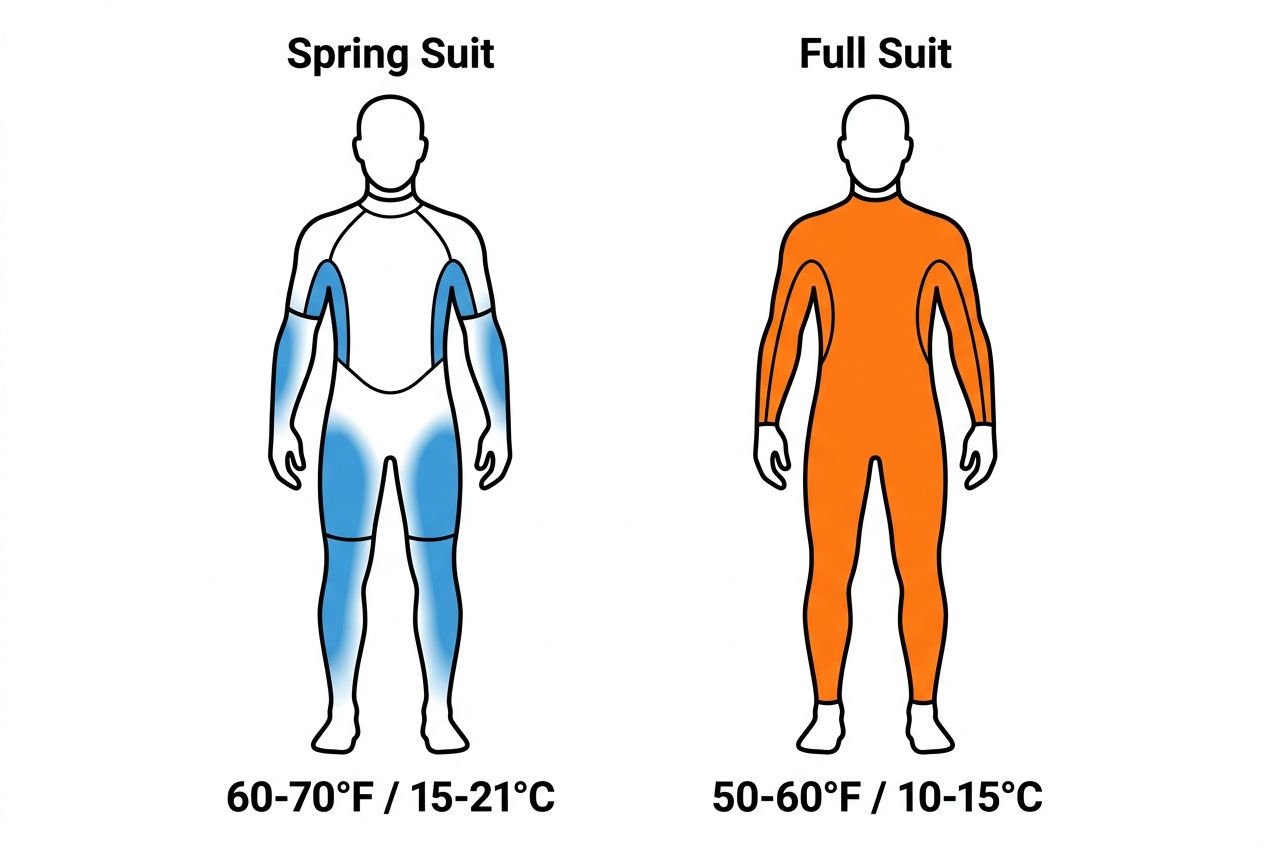
As soon as climate enters the equation, water temperature becomes the key factor. A spring suit works best around 15–24°C and suits milder days, summer surf, and shoulder-season sessions, while a full suit handles colder water temperatures below 15°C far better.
By contrast, if you regularly surf through autumn and winter, a 4/3mm or 5/4mm steamer is built for cold water and longer exposure. A 3/2mm full wetsuit often gives you the broadest usable range in UK conditions, from spring into autumn, which makes it the right choice when you need one suit to do most of the work.
By contrast, a springsuit usually makes more sense as a second suit for warmer days rather than your only option. Mundo-Surf stocks both spring suit and full suit models across the main thicknesses, with 100-day returns so you can test the suit in real conditions before committing.
Does a spring suit keep you warm enough to surf
That depends on the water temperature and how long you stay out. A spring suit gives solid insulation through the torso in mild to warm water, but its reduced coverage means your legs lose heat quickly once conditions shift into cool water.
Thermal performance of spring suits in real conditions
That sets the limit clearly: a spring suit keeps you warm enough for core protection in water between 15°C and 24°C. By contrast, it cannot deliver the full-body insulation needed for cold water, because exposed legs let heat escape fast during longer sessions.
- Core insulation: the neoprene around the torso traps a thin layer of water warmed by your body, helping maintain comfort in cool water above 15°C.
- Leg exposure: with less lower-body coverage, water circulates freely around the legs, which cuts session time as the water temperature drops towards 15°C.
- Wind and overcast conditions: 17–18°C can feel much colder with wind chill, and on the water, that matters: a full suit gives protection a spring suit cannot match.
- Session length: short sessions in moderate conditions stay manageable, but extended time in cooler water raises heat loss and makes a full suit the right choice when warmth becomes the priority.
For cold water surfers, a full suit holds warmed water across the whole body, which extends sessions well beyond what a spring suit allows.
Are spring suits worth it for regular surfers
Once warmth limits are clear, the answer comes down to where and when you surf. In warmer water above 19°C, a 3/2mm spring suit brings enough insulation, quicker drying, and better range of motion than a full suit, which makes it a smart option for regular sessions.
Building on that, a spring suit is built for warm water and some cool water days, while a full suit remains the safer call for cold water coverage and longer exposure. Mundo-Surf offers options to help you choose the right fit for your season and conditions: spring wetsuit.
Should I get a spring suit or a full wetsuit
The answer comes down to water temperature and how much freedom of movement you need, and those two usually point in different directions.
Mobility and fit differences between suit types
If you are asking should I get a shorty or full wetsuit, start with coverage. A spring suit covers the torso with short legs and leaves more of the arms and legs free, which makes movement feel easier in warm water.
- Spring suit mobility: Thinner 2mm or 3/2mm neoprene, plus reduced coverage, gives you more natural paddling and less bulk for active sessions.
- Full suit restriction: A full suit or steamer in 4/3mm or 5/4mm adds insulation and protection, though modern stretch panels keep movement far better than older suits.
- Closure systems: Back zip is simple to use, front zip often feels more secure, and zip-free designs maximise flexibility but usually take more effort to get on.
Building on that, the difference comes down to how quickly you lose heat. Once the water temperature drops below 18°C, a full suit becomes the right choice when warmth matters more than absolute freedom, and a 3/2mm can still feel flexible enough for regular sessions in mild cold water. The full wetsuit guide at Mundo-Surf breaks down wetsuit thickness, entry systems, and stock across the range.
Practical factors when choosing your first wetsuit
That shift in priority matters even more for a first buy. In the UK, a 3/2mm full wetsuit usually covers more of the season than a spring suit, so you get broader use from a single suit in changing conditions.
- Water temperature: A 3/2mm often suits 15–20°C, while 4/3mm is better suited to colder water temperatures below 14°C.
- Drying time: A spring suit dries faster because there is less material to hold water.
- Durability: For frequent use, GBS seams are worth looking for; with proper rinsing and drying in the shade, either type can last three to five years.
If you surf mainly in warm water, a spring suit makes sense; if you need one suit for mixed seasons, a 3/2mm full suit gives better protection across changing conditions. You can compare the two directly in the spring suit vs full suit range at Mundo-Surf, with 100-day returns.
Women's spring suit vs full suit considerations
That same logic applies to fit. Women-specific cuts shape the chest and waist more precisely than many unisex suits, which helps limit flushing and keeps insulation working properly, especially in a full suit used in cold water.
By contrast, a women’s spring suit in 3/2mm can be a smart middle ground for milder sessions: enough core warmth, less restriction through the shoulders, and better comfort when the sea moves towards warmer water. On the water, that matters.
| Feature | Spring suit | Full suit (steamer) |
| Coverage | Torso + short legs | Neck to wrists and ankles |
| Wetsuit thickness | 2mm or 3/2mm | 3/2mm, 4/3mm, 5/4mm |
| Water temperature | 18–24°C, including warm water | Below 18°C, including cold water |
| Mobility | High, lighter and less bulk | Moderate, varies with thickness |
| Drying time | Faster | Longer |
| Best for | Summer and transition-season sessions in warmer water | Autumn, winter, and cold water surfers |
Frequently asked questions
What are the main wetsuit types and how do spring suits fit into them?
The main wetsuit types in surfing are straightforward: short john, long john, shorty, spring suit, and full suit. A short john has no sleeves and short legs, while a long john keeps the arms free but adds full legs.
Building on that, a spring suit usually combines short legs with either short or long sleeves, while a full suit, often called a steamer or fullsuit, has full sleeves and legs.
Once those categories are clear, the useful comparison is with water temperature and session length. A spring suit covers less than a full suit, so it suits milder water and shorter sessions, while a full suit is built for colder conditions and longer time in the sea.
What are the key differences between a spring suit and a full suit?
Coverage and neoprene thickness are where the spring suit and the full suit part ways. A spring suit covers the torso and part of the limbs, usually with short legs and either short or long sleeves, most often in 2mm or 3/2mm neoprene for cool water around and above 15°C.
By contrast, a full suit or steamer covers the whole body with complete sleeves and legs, typically in 3/2mm through to 5/4mm. That extra coverage brings more insulation and better protection in cold water below 15°C; on the water, that matters.
Building on that added insulation, a spring suit trades some warmth for easier movement and less restriction through the shoulders and knees. The right choice when you want more freedom in milder conditions is the spring suit.
Can I use a spring suit in the UK year-round?
A spring suit does not work as a year-round option in the UK. Sea temperatures around the British Isles commonly drop below 12–14°C in winter and, in many areas, only reach about 18°C in summer.
In practice, a spring suit makes sense for the warmest summer windows in milder regions. For autumn, winter, and plenty of spring sessions, especially for cold-water surfers, you will need a 4/3mm or 5/4mm full suit for proper insulation and protection.
That makes the spring suit a second suit alongside a steamer, not a replacement for it. Worth knowing before you buy: if it is your only option, keep it for water temperatures above 17°C, because exposed lower legs increase heat loss fast.
Recommended products
Share this article: