Shopping Cart
There are no more items in your cart


Difference between a rash guard and a wetsuit explained


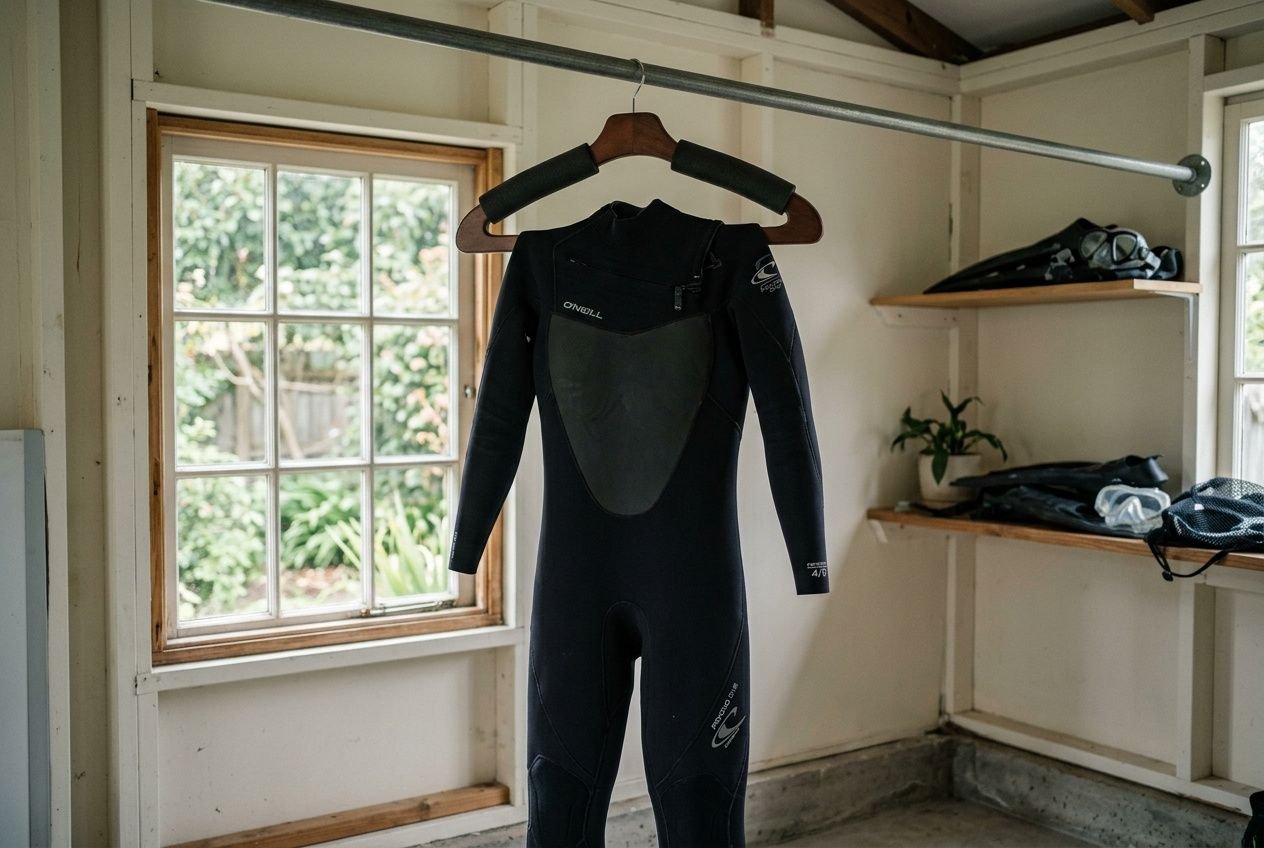
The difference comes down to function. A wetsuit is built to keep you warm with neoprene and insulation, while a rash guard is built to shield your skin from UV exposure, chafing and abrasions in warmer water.
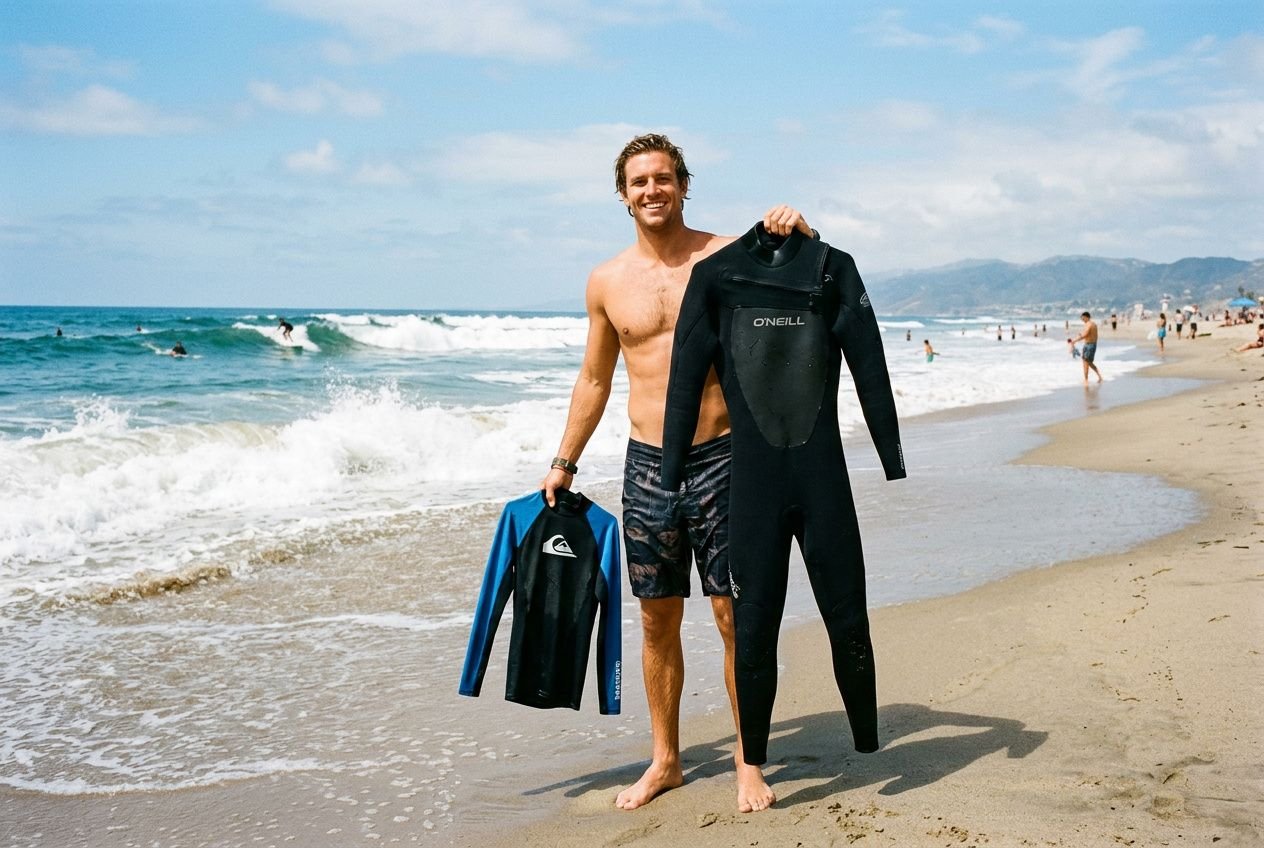
Rash guard or wetsuit: what is the real difference?
Material and construction: neoprene vs lightweight fabrics
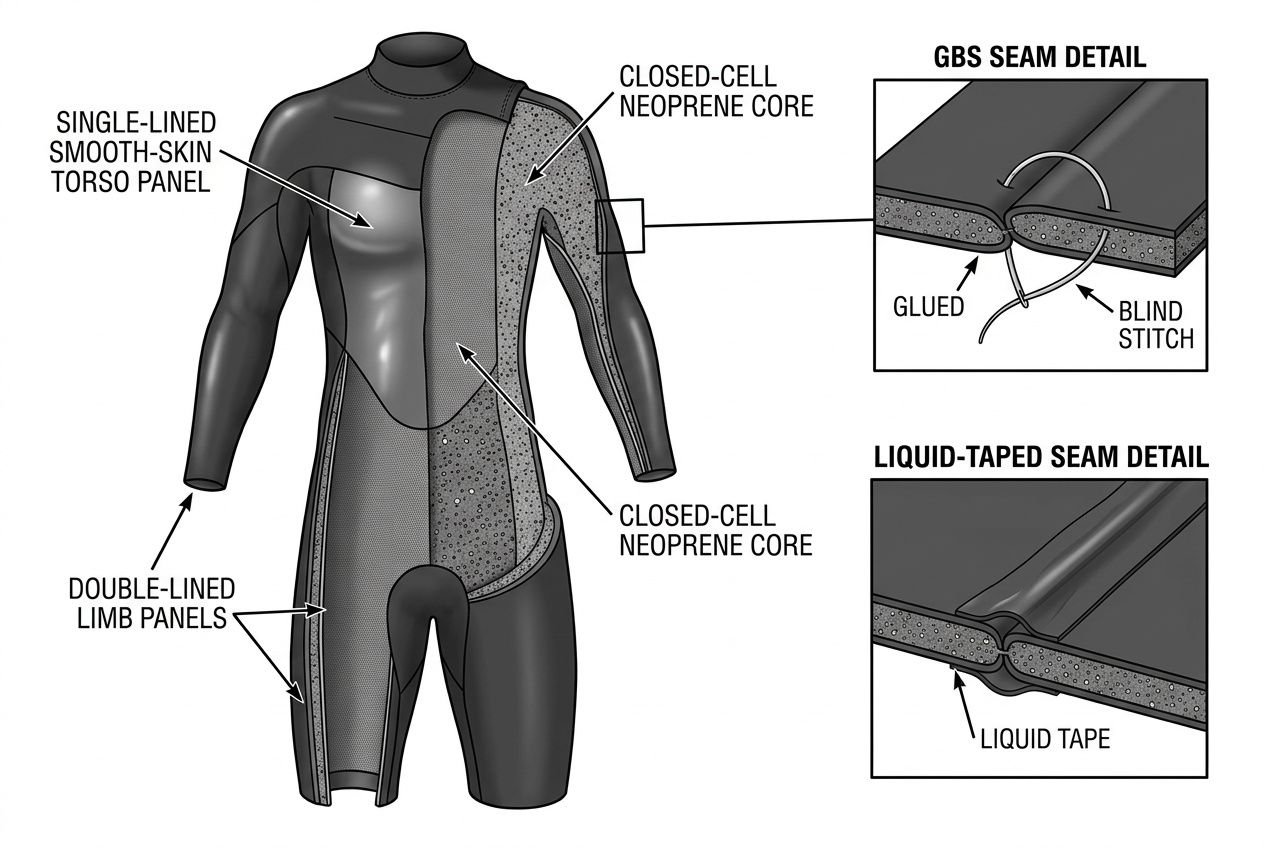
The difference between a rash vest and a wetsuit starts with the material. A wetsuit uses neoprene, a flexible synthetic rubber filled with nitrogen bubbles: its thermal conductivity sits around 0.054 Wm⁻¹K⁻¹, roughly ten times lower than water, which limits heat loss and improves thermal protection in cold and colder water alike.
Building on that, the closed-cell structure helps hold a thin water layer against your body and slows further cooling. That is what gives a full wetsuit real insulation while still allowing solid freedom of movement through the shoulders and upper body.
By contrast, a rash guard is made from lightweight polyester, spandex or elastane blends. It dries in under two hours, sits close to the skin, and helps protect against sun, chafing and minor abrasions, but it offers no meaningful thermal protection in colder conditions.
Worth knowing before you buy: if you want the technical detail on foam cells, linings and seams, the neoprene wetsuit guide at Mundo-Surf explains how each part affects warmth, flex and durability.
Which one suits your water temperature?
If you are choosing a wetsuit or rash guard, start with water temperature, because the same session can feel fine in warmer water and turn short fast once the water gets colder.
Above 75°F, you can wear a rash guard without risking overheating, and a long sleeve rash guard gives better sun protection and extra cover against reef contact. Once you drop below that mark, a wetsuit becomes the right choice when you want to stay comfortable for longer than a quick paddle.
- Above 75°F (tropical): wear a rash guard, with a long sleeve rash guard recommended for full UV coverage and reef abrasion protection
- 65–74°F (warm to mild): a 2–3mm wetsuit or spring suit provides thermal protection without restricting freedom of movement
- Below 60°F (cold UK waters): a full wetsuit of 4–5mm minimum, with sealed seams, neoprene hood and gloves for cold water sessions
In colder water, and especially in colder UK conditions, even a thin wetsuit gives far better insulation and protects you from the fatigue that comes with heat loss; on the water, that matters.
Can you wear a rash guard under a wetsuit?
Yes, you can wear a rash guard as a base layer under a wetsuit. Its main job there is simple: reduce chafing from seams and help protect the skin over longer sessions, which is why these tops first appeared in surf use in the mid-1980s.
As soon as you start layering, fit matters more. If the suit is too tight or too loose, that extra layer can bunch up, limit freedom of movement, affect the seal and reduce thermal protection, so check the wetsuit sizing guide before adding a base layer.
Wetsuit performance for surfing in cold UK waters
UK sea temperatures sit around 8°C in winter and can reach 18°C in summer. That spread changes everything. For year-round surfing, you build around a proper wetsuit: neoprene first, accessories second.
When does a thermal rash vest fall short?
A thermal rash vest gives more protection than a standard rash guard, thanks to fleece-lined or insulated fabric, but it stays well below the insulation reserve of a full wetsuit.
In practice, a thermal rash vest works in mild water conditions around 65–74°F, for short sessions, or as a layer under a light full suit. Once the water temperature drops into typical UK cold-water territory, that option stops making sense.
- Below 65°F: thermal insulation from any rash vest is not enough; neoprene wetsuits are the reliable choice for extended exposure
- Duck-diving regularly: neoprene still compresses at depth, but a vest has no real insulation reserve, so heat loss builds quickly with each dive
- Winter UK sessions: water at 8–10°C calls for a 5mm full wetsuit with welded seams; no thermal rash vest provides adequate warmth there
Building on that, wetsuits and rash guards are not interchangeable. In colder water conditions, the difference comes down to one thing: only neoprene delivers the insulation you need to stay in the water long enough to surf properly. Mundo-Surf keeps a full range in stock, with thickness options matched to local breaks.
Wetsuit thickness and seam types for UK surfing
For UK surfing conditions, those two details decide whether your suit keeps heat in or lets sessions end early.
The table below matches common UK water temperature ranges to the right full suit setup:
| Season | Water Temp (°C) | Wetsuit Thickness | Seam Type | Extras |
| Winter | 8–11°C | 5–6mm full suit | Liquid-taped / welded | Hood, gloves, boots |
| Spring/Autumn | 12–15°C | 4–5mm full wetsuit | GBS (glued and blind-stitched) | Boots recommended |
| Summer | 16–18°C | 3mm spring suit | Flatlock or GBS | Optional boots |
From there, seam choice refines the result. Flatlock suits let more water through, so they fit warmer water better. GBS seams glue and stitch panels without fully piercing them, which gives a solid balance of warmth and flexibility. Liquid-taped or welded seams push that further on thicker neoprene suits, reducing water entry at every seam.
Worth knowing before you buy: Mundo-Surf also offers limestone-based neoprene and plant-based Yulex alternatives for surfers looking to lower environmental impact without giving up performance.
Choosing the right wetsuit or rash guard for your activity
The difference comes down to matching your gear to the conditions in front of you. Surfing in Cornwall in October calls for something very different from snorkelling in the Maldives in July. Start with water temperature, then build on that with session length and effort level.
Activity-by-activity guide for men and women
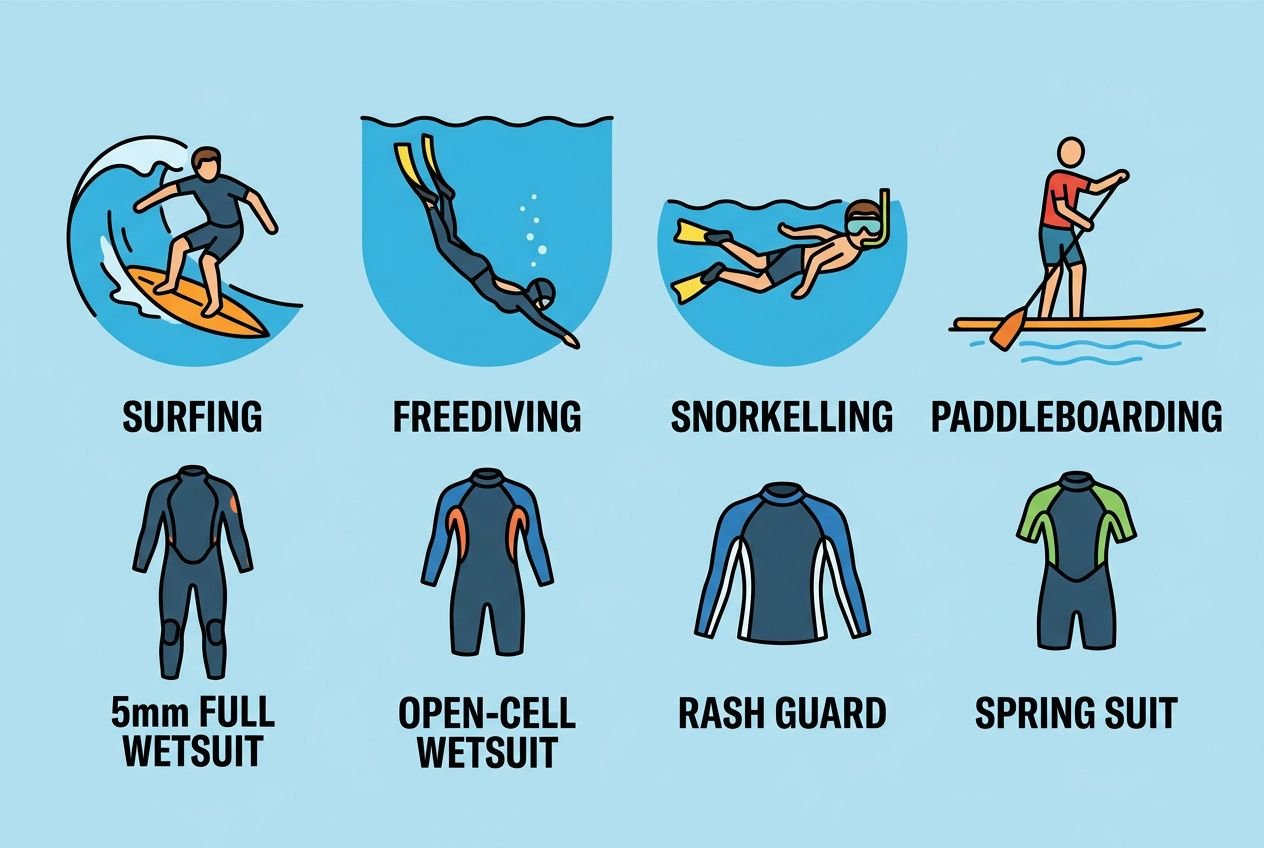
A freediver needs a close-fitting suit with low drag, while a tropical swimmer in warm water often needs only light coverage.
- Surfing and bodyboarding (temperate water): a 3–5mm full wetsuit with GBS or welded seams; for summer water activities in the UK, a shorty or spring suit can be enough
- Freediving: open-cell neoprene for close skin contact and reduced drag; it accepts some water uptake in exchange for superior fit and less interference with buoyancy
- Snorkelling and casual swimming (above 75°F): a rash guard for sun protection, reduced chafing, light cover against sea lice and unrestricted movement
Those are the clear-cut cases. Kayaking and paddleboarding in mild water, around 60–74°F, sit between those extremes. In practice, a 2–3mm spring suit or shorty protects the core while keeping the arms free for paddling. The same logic applies to open-water swimming, where a colder start often justifies at least a thin neoprene layer, even in summer.
Protection beyond warmth: marine hazards and UV coverage
A rash guard gives strong sun protection: UPF 50+ blocks 98% of UV rays, far beyond the 5–8 UPF of a cotton T-shirt. It is the right choice when your priority is sun exposure in warm water rather than insulation.
By contrast, a full suit covers far more skin and helps protect you from jellyfish, reef abrasions and floating debris. A full wetsuit also makes sense for wildlife contact, and in shark diving, exposed limbs raise risk regardless of conditions. Mundo-Surf's rash guard vs wetsuit range covers both ends of that spectrum, from UPF 50+ guard to 5mm full suit.
Fit, comfort and practical considerations for daily use
Building on that, comfort decides whether your gear works for one session or all week. Rash guard fit shapes both feel and coverage: a close performance cut suits high-output water sports and reduces friction from wax or equipment contact, while a looser cut works better for boating or beach use. On the water, that matters when you are on a board for three hours, not drifting at the shore for thirty minutes.
Lamination and lining matter too. They affect drying time, and that can mean a difference of 20 to 30 minutes per session with a wetsuit. As soon as you surf daily, that saved time becomes noticeable.
The right wetsuit or rash guard depends less on branding than on use. For surfing, a full wetsuit or full suit is usually the safer pick in colder sessions.
Frequently asked questions
Do you need a rash guard with a wetsuit?
Not always. A rash guard under a wetsuit helps in specific cases: it adds a thin layer between your skin and the neoprene, which reduces friction on seams and helps protect against chafing during longer sessions.
For a short surf in a wetsuit that already fits properly, you usually do not need one. If you get irritation around the neck or under the arms, a close-fitting rash guard fixes that without compromising the thermal seal, as long as the suit is correctly sized. That matters most when your movement is repetitive and the session runs long.
What are the key differences between rash guards and wetsuits for warm water?
Once the water temperature climbs above 75°F, a full wetsuit can lead to overheating and limit natural movement, while a rash guard stays light, breathes easily, and still gives you solid sun protection.
A wetsuit is built to retain heat. That is exactly what you want in cold water, and exactly what works against you in tropical or mild conditions. By contrast, a rash guard helps protect your skin from board rub, salt, and sand without trapping extra warmth.
Is a full suit necessary for UK surfing year-round?
In UK waters, cold is the rule for most of the year: temperature drops to 8°C in winter and rarely gets past 18°C in summer, so a full wetsuit remains the standard across the seasons.
For winter, a 5mm full suit with welded seams and the right accessories is the right choice when conditions turn harsh. Summer can be handled with a 3mm suit, but not with a rash guard alone in any reliable way. Worth knowing before you buy: those brief post-heatwave spells of unusually warm water do happen, yet they are too short-lived to plan your surfing around. Mundo-Surf stocks suits from 3mm to 5/4mm so you can match the right thickness to the conditions as they shift.
Share this article: