Shopping Cart
There are no more items in your cart


How to store a wetsuit long-term: the complete guide


This guide covers everything you need to know about how to store a wetsuit long-term, from rinsing and drying it properly to choosing the right place, so your suit stays flexible, clean, and ready for the next run of swell.
How to store a wetsuit long-term and preserve its condition
Good long term wetsuit storage starts the moment you get out of the water. If you want to store a wetsuit properly, every step counts: rinse your wetsuit, let it dry properly, then keep it in a stable dry space away from heat and direct sunlight.
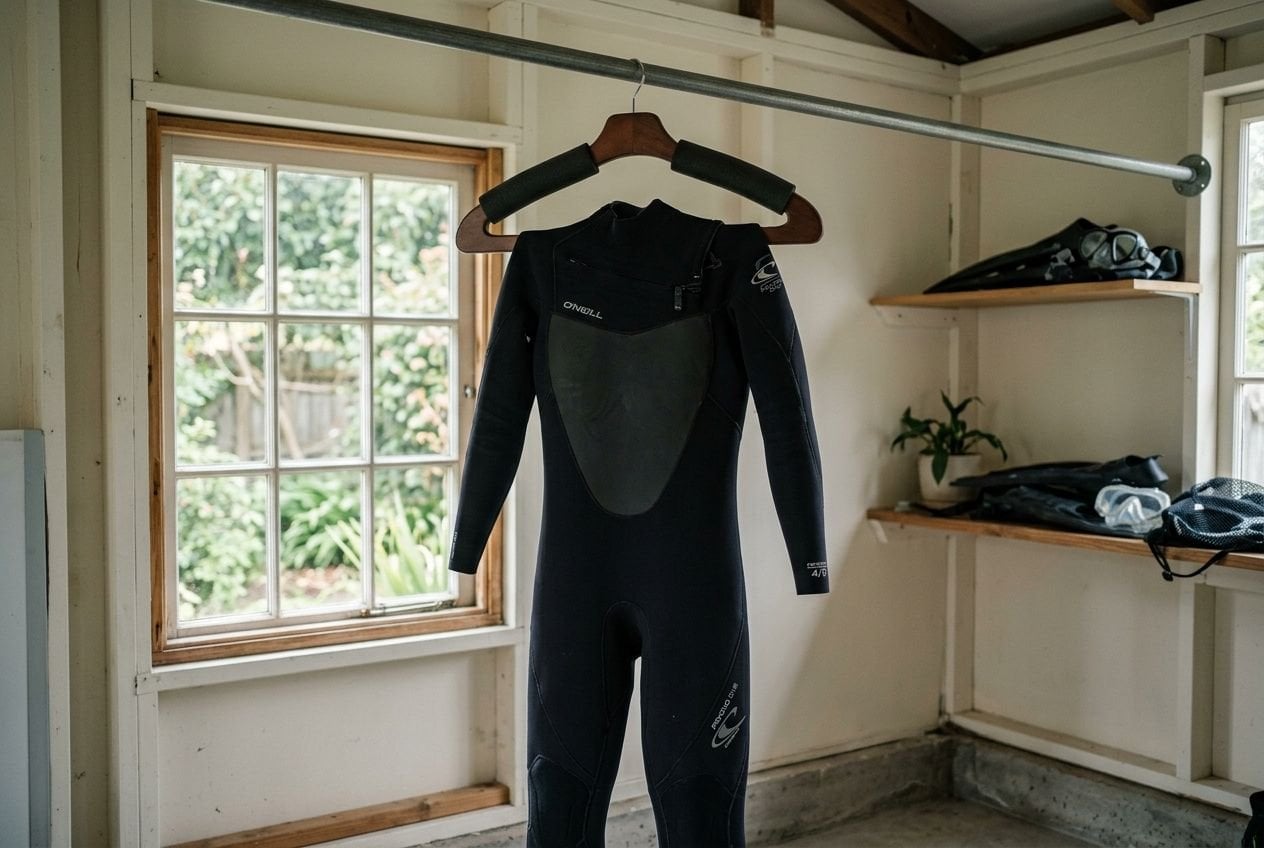
Wetsuit care after use: rinsing and drying essentials
Wetsuit care after use sets up everything that follows. In practice, if the suit goes into wetsuit storage with salt, sand, or moisture still in the lining, neoprene starts to lose flexibility far sooner, sometimes within months.
Start with a thorough rinse. Use fresh water or cool water only, never hot, and turn your wetsuit inside out so the inner lining gets properly cleaned. That is the part that holds the most saltwater, sand, and residue.
Once it is fully rinsed, press water out gently rather than wringing it through the seams. If you wash your wetsuit this way after every session, you cut down the risk of a lingering smell and give the materials a much better shot at long-term durability. You can also find helpful gear in Mundo-Surf’s wetsuit storage accessories range.
How to dry a wetsuit in winter before storing it
How to dry a wetsuit in winter matters because cold air and damp rooms slow everything down, especially with a thick winter suit.
First, turn your wetsuit inside out and leave the inner lining to dry before flipping it back. The wetsuit needs time, sometimes several days, and the right place makes the difference: a ventilated indoor dry space with plenty of shade, never near a radiator and never in direct sunlight.
For a proper wetsuit to dry, air movement matters more than heat. A spare room, utility area, or open cupboard works far better than a shed or car boot, where temperature swings and trapped moisture get in the way. Pull the suit on months later and it still feels supple, that is the payoff.
Best hanging and storage methods for long-term care
Once the suit is fully dry, storage position becomes the next pressure point. The right choice when you want to protect the shoulders and seams is either careful hanging on a proper wetsuit hanger or keeping it flat with no weight on top.
For hanging your wetsuit, use a wide hanger designed for the job. A proper wetsuit hanger spreads the load instead of pulling at the neck, and if the suit is heavy, storing it draped at the waist is safer than leaving it stretched from the shoulders.
By contrast, if you do not have enough room for hanging, lay the suit flat in a breathable bag or on a shelf. Avoid repeated folding, and do not leave it tightly folded along the same crease for long periods, because those lines often become crack points.
Building on that, the room itself matters just as much. Store your wetsuit indoors in a cool, ventilated area, not in a garage, loft, or damp shed; a bedroom closet or cupboard is usually a far better option for storing your wetsuit. Mundo-Surf also keeps useful care resources available, including this wetsuit storage guide.
Do wetsuits stretch over time and when should you replace them
Do wetsuits stretch over time? Yes, they can. The difference comes down to repeated use, oxidation, and storage habits, especially if the suit spends too long damp, compressed, or hanging badly.
A suit that is rinsed, dried on both sides, and kept in proper wetsuit storage will usually outlast one shoved into a bag after a session. Mundo-Surf’s wetsuit storage guide covers the full breakdown before you invest in extra storage kit.
If the fit opens up at the neck, wrists, or ankles, if the lining keeps a strong smell after you wash your wetsuit, or if you spot fine cracks and stiff seams, the suit is already losing thermal performance and flexibility.
| Storage condition | Effect on wetsuit | Recommended action |
| Direct sunlight exposure | UV breaks down polymers, causes brittleness | Always store in shade or indoors away from sunlight |
| Thin metal hanger | Stretches shoulder panels, distorts fit | Use a wide padded wetsuit hanger or fold at waist |
| Folded in tight bag | Permanent crease lines become crack points | Lay flat or hang; roll rather than fold if space is limited |
| Stored whilst damp | Mould growth, persistent smell, material rot | Ensure fully dry on both sides before storing |
| Near radiator or heat source | Destroys natural stretch, weakens seams | Store in a cool dry indoor space, away from heat |
| Heavy objects stacked on top | Neoprene compression causes irreversible cracks | Keep the suit clear of any weight during storage |
Frequently asked questions
How do you store a wetsuit when not in use?
Start after every session: rinse your wetsuit thoroughly with fresh water. Let it dry fully, inside out first and then the right way round, in the shade and away from direct sunlight, heat, and UV exposure, because neoprene breaks down faster in those conditions.
Once it is dry, store the wetsuit either by hanging it correctly or by keeping it flat in a breathable bag inside a cupboard with a stable temperature. Hang it at the waist on a wide padded hanger, not from the shoulders or neck; if you need to fold it, avoid sharp creases, keep it loosely folded, and never leave heavy items on top.
Building on that, the place matters just as much as the method: use a dry space rather than a garage or shed, where temperature swings speed up wear.
How long will a wetsuit last in storage?
If the suit was rinsed, dried properly, and stored well, it can stay serviceable for three to five years.
By contrast, budget suits with flatlock seams often last one to two years regardless of care. The difference comes down to construction, but storage still plays a real part.
Once it is folded or hanging away in a dry space, keep an eye on it over the coming months. Check it regularly for mould, because even in storage neoprene slowly oxidises, and a suit that was not fully dry before being put away will age much faster.
Should you hang or fold a wetsuit for long-term storage?
For long-term storage, hanging is usually the right choice when you have enough room. Use a wide padded wetsuit hanger, or drape the suit folded at the waist over a thick bar or beam, and avoid hanging it from the shoulders.
When space is tighter, keep it flat in a breathable mesh bag inside a cupboard or other dry space. If you do need to fold it, roll it loosely rather than creasing it sharply, as hard crease lines can turn into weak points over months.
Worth knowing before you buy: whether the suit is hanging or laid flat, keep it cool, dry, and out of direct sunlight, the environment degrades neoprene just as surely as poor technique.
Recommended products

Share this article: